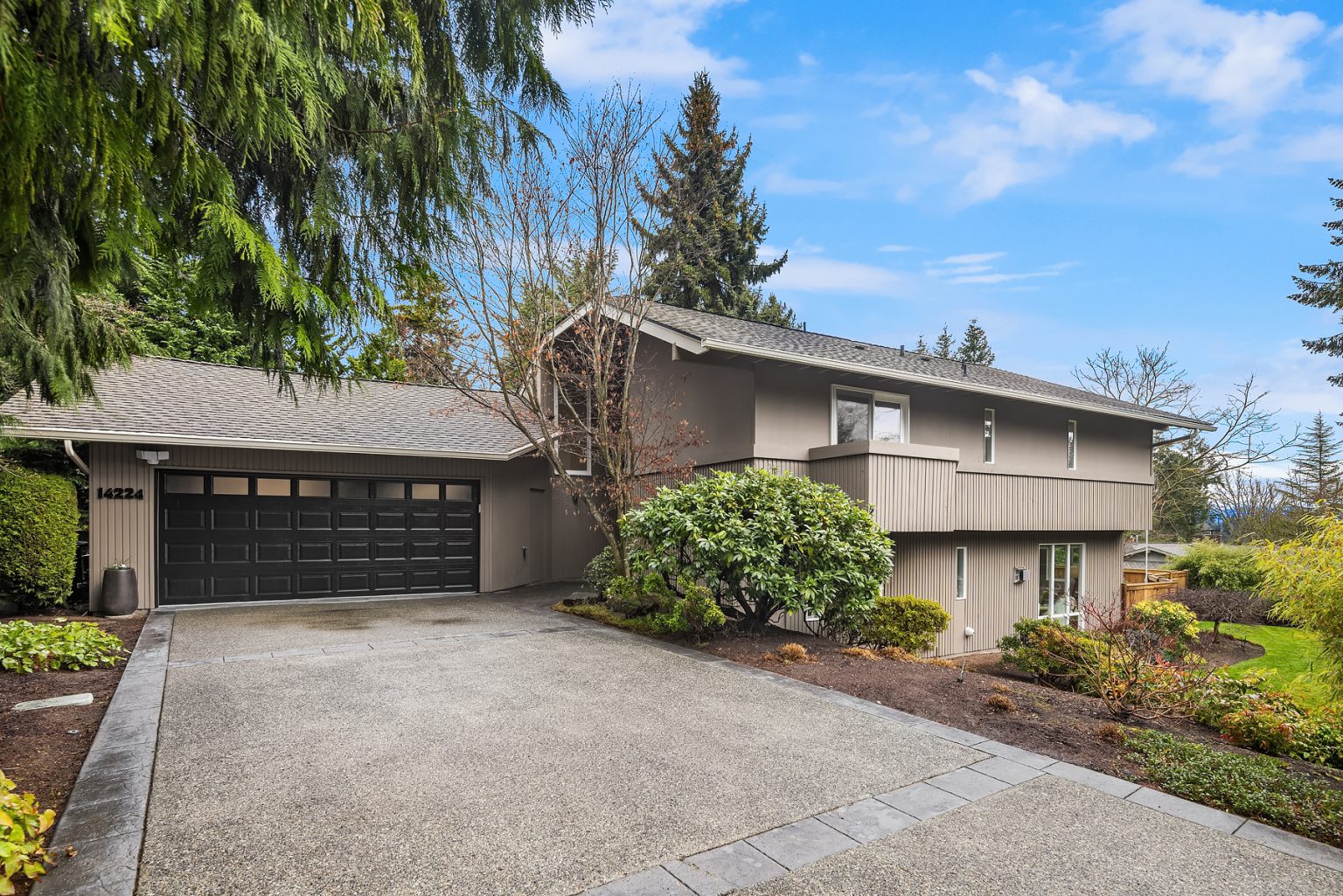
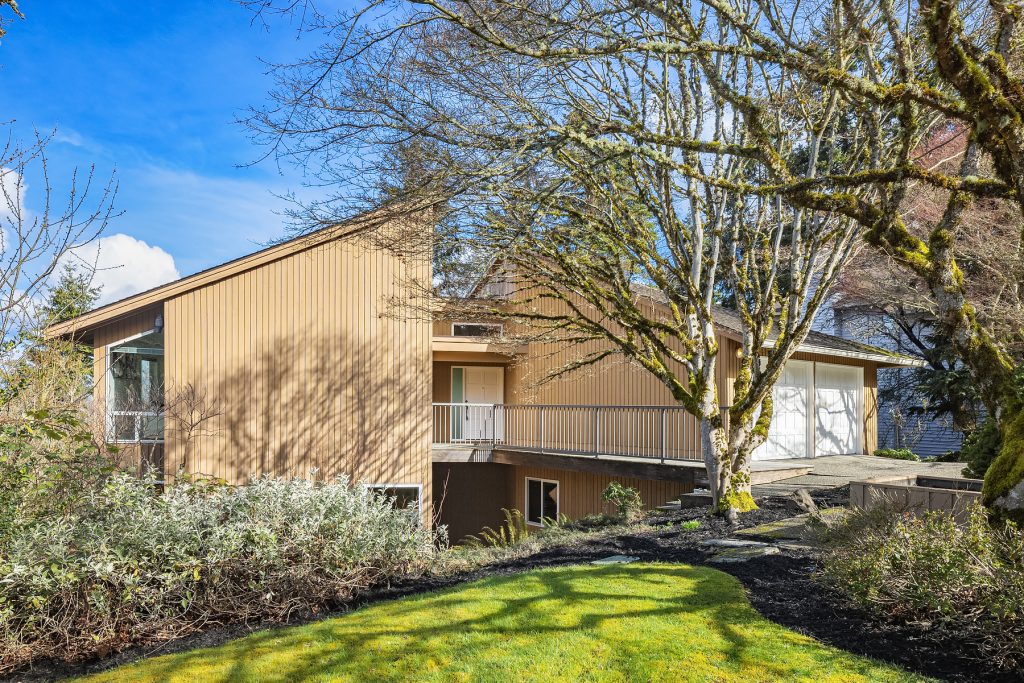
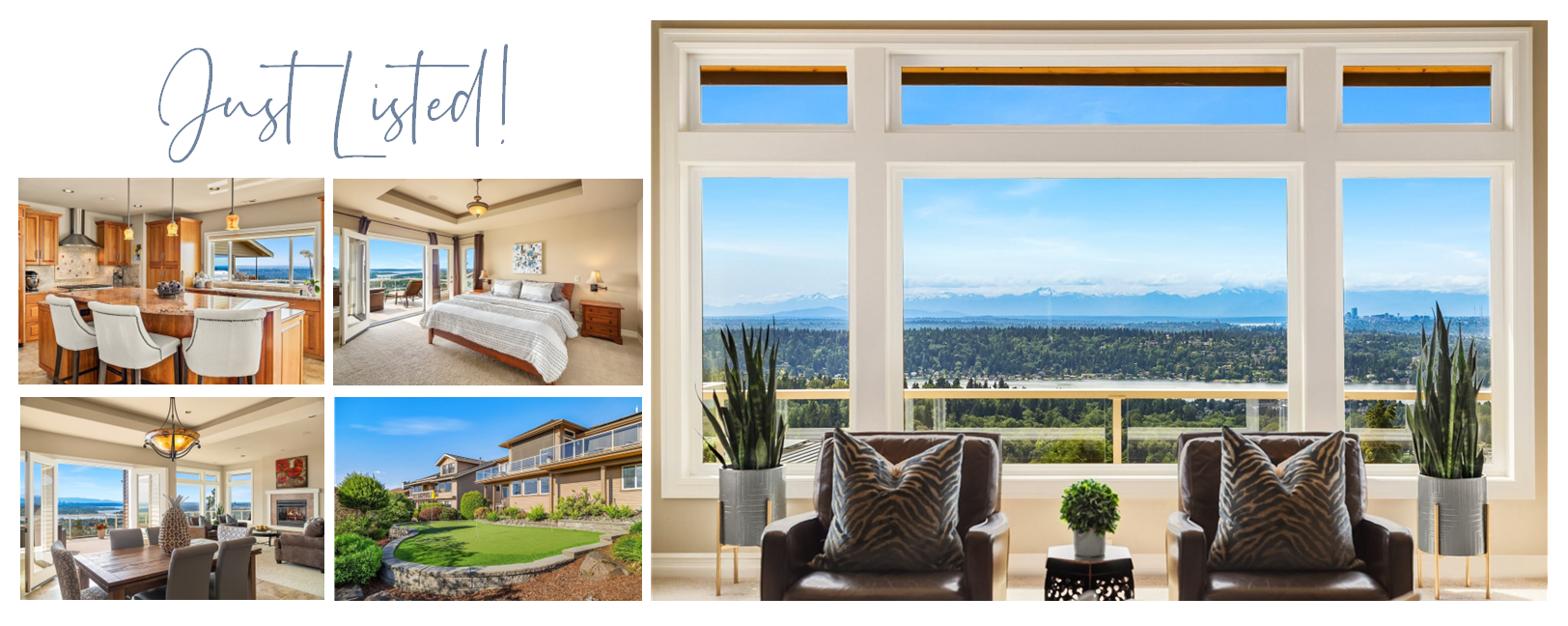
4 BEDS|2.5 BATHS|2,350 SQFT | OFFERED AT $1,788,000
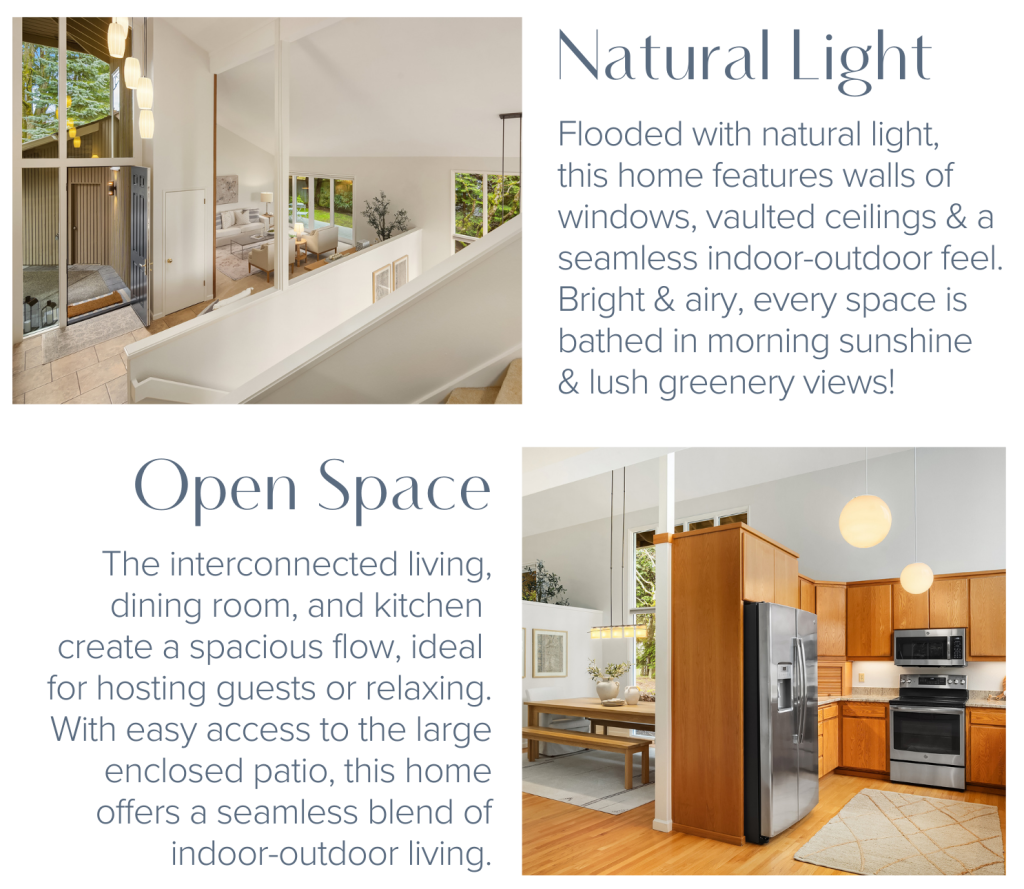
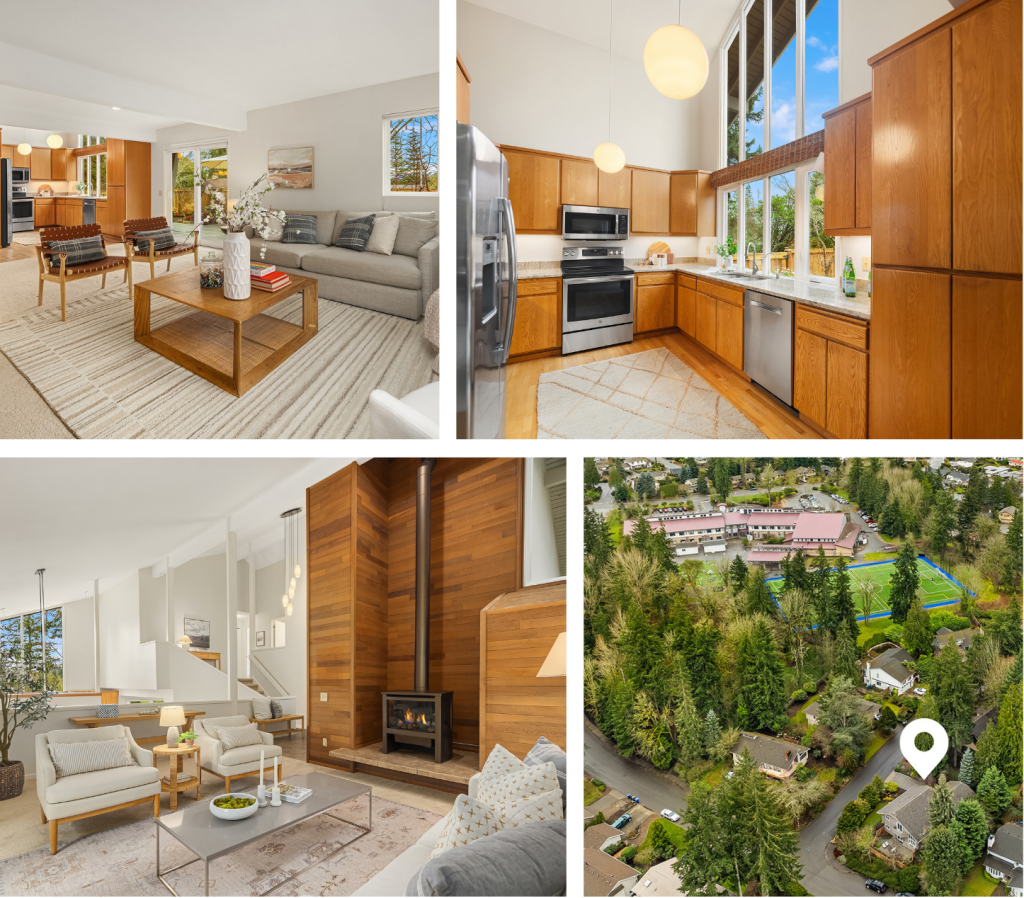
One-of-a-kindSomersetoasis. Surrounded by lush greenery, this bright, inviting home brings the outside in with walls of windows, vaulted ceilings & an abundance of natural light. Two welcoming living areas, each with a gas fireplace, offer flexible spaces to relax or entertain and seamlessly flow into the kitchen, dining area & private patio. Upstairs boasts three decks, including oneoff the spacious primary suite with
a walk-in closet & ensuite bath. Three additional bedrooms provide plenty of space for everyone. A hop, skip & jump from Somerset Elementary, a prime location in a top school district. Tyee Middle & Newport HS. This home offers comfort, privacy & convenience.
Central AC/heat ensures year-round comfort. Don't miss this gem!
5 BEDS|3.5 BATHS|4,758 SQFT | OFFERED AT $2,399,000
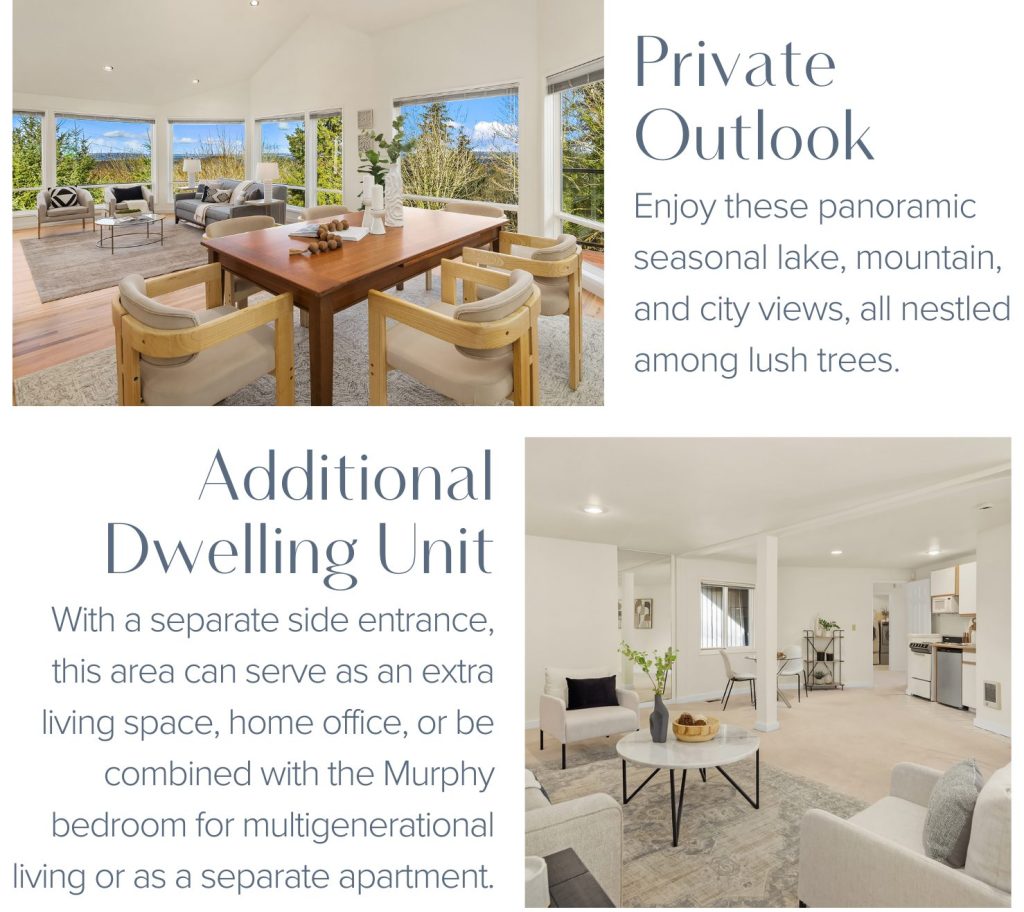
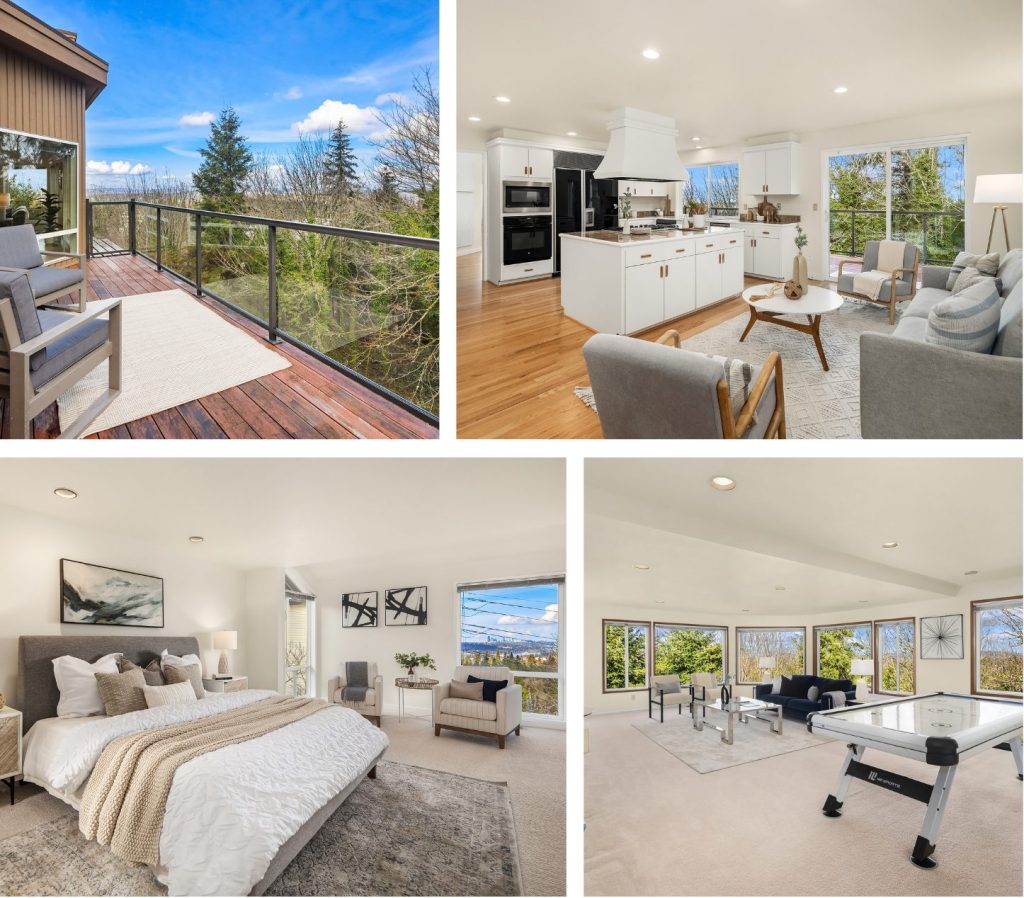
StunningSomersethomewith oversized, light-filled spaces & a private outlook, offering seasonal lake, mountain & city views surrounded by lush trees. The main floor features spacious formal & informal spaces-perfect for everything from quiet weeknights to hosting large holiday meals. Main floor primary bedroom with expansive ensuite bath & closet. The lower level has a studio with kitchenette & bedroom. Great for generational living or WFH office. Three add'l bedrooms & a large bonus room, perfect for gatherings, gaming or play. A fun yard to fuel the imagination. This home has AC for hot summer days & a generator for blustery weather. A must-see property that offers both privacy & convenience. Award-winning Somerset/Tyee/Newport schools.
Large appliances (washers/dryers, stoves, dishwashers, etc.) | Tube TVs/ Projection TV *Flat screen TVs are accepted* | CRT Monitors | Water Heaters | BBQs | Patio Furniture | Exercise Equipment | Dry Cell Batteries (Ex: A,AA,AAA etc) | Nothing that contains oil or chemicals
by Sandy Dodge
A form of cybercrime, wire fraud has led to major losses for homebuyers in recent years. Get to know what it is and what steps you can take to avoid it.
What is wire fraud?
Real estate wire fraud is a scam that targets buyers while making payments during the home buying process. Attackers have taken advantage of the fact that there are several people and entities involved in real estate transactions. Between real estate agents title and escrow companies, mortgage lenders and more, there are many steps, some of which involve sharing financial information and transferring money. This gives ample opportunity for scammers to slip through the cracks somewhere along the line.
The timing of wire fraud is typically during closing using a sophisticated phishing scam. Attackers apply the use of fake emails, phone numbers, or websites, often posing as the buyer’s real estate agent and directing them to allocate funds to a fraudulent account. Because the attacker will have scanned, scrubbed, and lifted your personal information in preparation for the scam, their forms of communication can often look familiar and legitimate.
The mission of the cyberattack is to get your funds into an account the attacker owns. To do this, it is common for them to say that you had previously sent funds incorrectly, that they were never received, that there are new instructions for payment, or that there has been a last-minute change in the closing process. These are all major red flags. It is imperative to take extra caution during the final steps of purchasing a home because transfers, once initiated, are difficult to remedy and can delay your closing process.
How can I avoid wire fraud?
Get to know the closing process: Talk with your Windermere agent ahead of time about what to expect throughout the closing process. Discuss payment options with your lender and ask specifically about instructions for wiring funds. It is safer to share this information over the phone than through email, as scammers could accumulate this information to use against you.
Record contact information: Keep a list of the personnel involved in your closing process. Beyond your real estate agent, keep a record of contacts at your mortgage lender, title company, and attorney’s office. In the event that someone new reaches out to you with a request, confirm their identity with one of your contacts.
Call to confirm: Call to confirm wiring instructions before sending the transaction through. Talk to a trusted representative and ask them to repeat the information to verify its legitimacy. After sending the funds, make same-day follow-up calls to ensure they were received.
Trust your gut: If you receive an iffy email or phone call, trust your gut. If something doesn’t feel right, it’s the perfect time to reach out to your contacts, discuss your hesitancy, and get advice before proceeding.
The threat of wire fraud emphasizes the importance of working closely with everyone involved in the purchase of your home. If you believe you have been scammed, contact your bank or wire transfer company immediately and request that they issue a recall notice for your wire. Contact the FBI’s Internet Crime Complaint Center and report the activity with as much information as you can gather. For more information about how to protect yourself from wire fraud, visit the National Association of Realtors’ Wire Fraud resources page.
Windermere Chief Economist Matthew Gardner revisits his Top 10 Predictions for 2023. Reviewing his forecasts for home prices, mortgage rates, and more, he highlights recent changes in the real estate market and updates his predictions for the near future.
This video is the latest in our Monday with Matthew series with Windermere Chief Economist Matthew Gardner. Each month, he analyzes the most up-to-date U.S. housing data to keep you well-informed about what’s going on in the real estate market.
Top 10 Real Estate Market Predictions 2023 | Mid-Year Update
Hello there, I’m Windermere Real Estate’s Chief Economist Matthew Gardner and welcome to this month’s episode of Monday with Matthew. You may remember that at the end of last year, I published my Top-10 Predictions for 2023 and, as we hit the mid-year mark, some of you have been asking me how well my forecasts have been holding up. So, I thought it would be interesting to take another look at them to see how accurate they have or have not been! These were the predictions I made last November, and they covered everything from my expectations for home sales and prices to shifting government policies.
U.S. Home Sale Prices
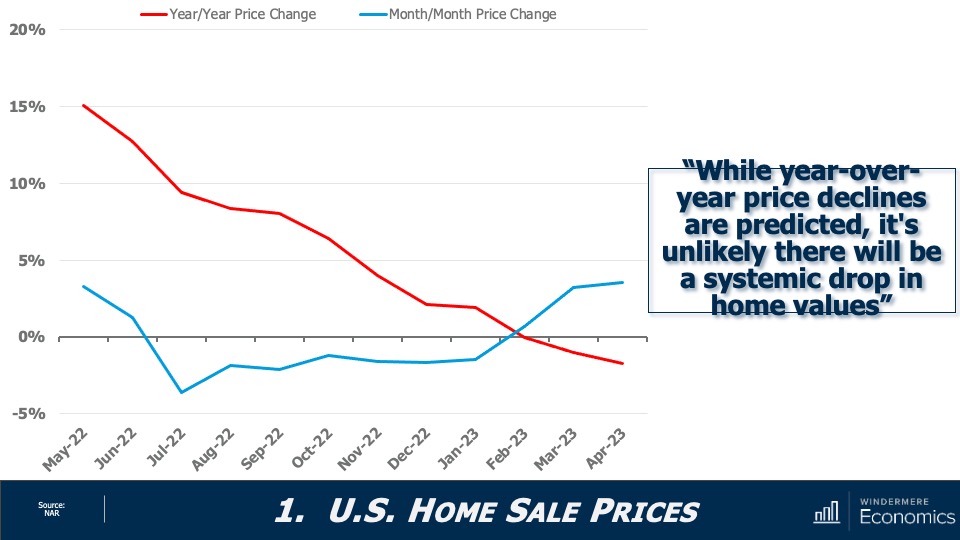
My first forecast suggested that sale prices would fall in 2023; however, I was not expecting any sort of systemic decline in values. Here you can see that year-over-year prices are down by a bit less than 2%, but when you look at how prices have changed month over month, they rose by 3.6% in April and are up by more than 6% since the end of last year.
I stand by my forecast that the median sale price in 2023 will be modestly lower than the 2022 number; and the monthly increase in sale prices that we have seen so far this year also supports my forecast that we are not seeing any long-term decline in home values.
2023 Mortgage Rates
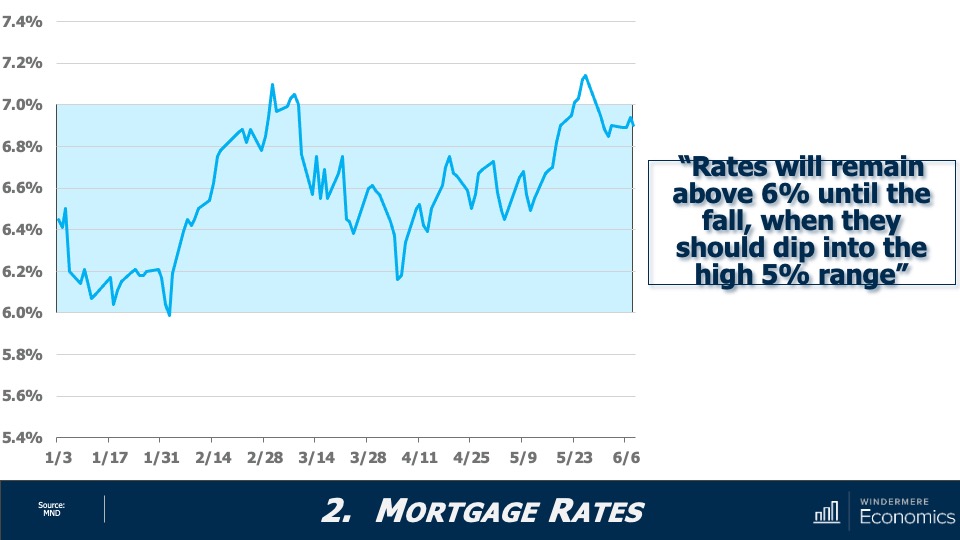
Although mortgage rates have broken above 7% eight times so far this year—the first time because of the banking crisis, and the second because of the looming debt ceiling—I expect them to become a little less frantic as we move through the second half of the year. That said, my call for them to drop below 6% this year is now likely to be inaccurate given where they are today. I still expect them to drop into the “fives” though, but not until early next year.
Is housing inventory increasing?
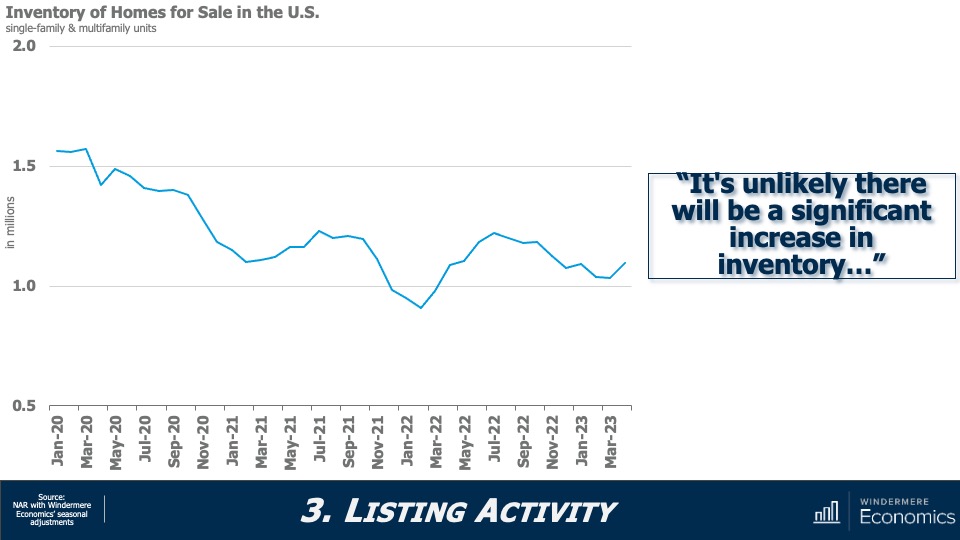
Listing activity saw a very modest late spring bump, but for perspective, the number of homes for sale is running at about 40% of its long-term average, and I still don’t see much growth this year. Why? Well, by my calculations, there could be over 20 million homeowners with mortgage rates around 3%. Why would they move!
Is 2023 a buyer’s or seller’s market?
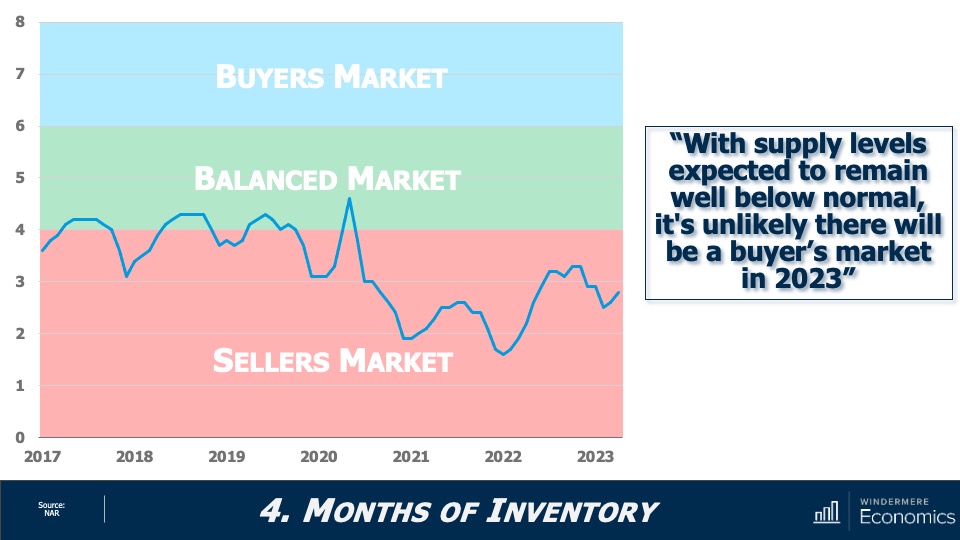
And with limited inventory, the market still “technically” favors home sellers. Now, this is a little speculative because what defines a traditional “buyer’s” or “seller’s” market varies by location, but with relatively few homes on the market and the share of homes with price reductions dropping and list prices rising again, I just can’t see a buyer’s market appearing this year.
Are home prices falling?
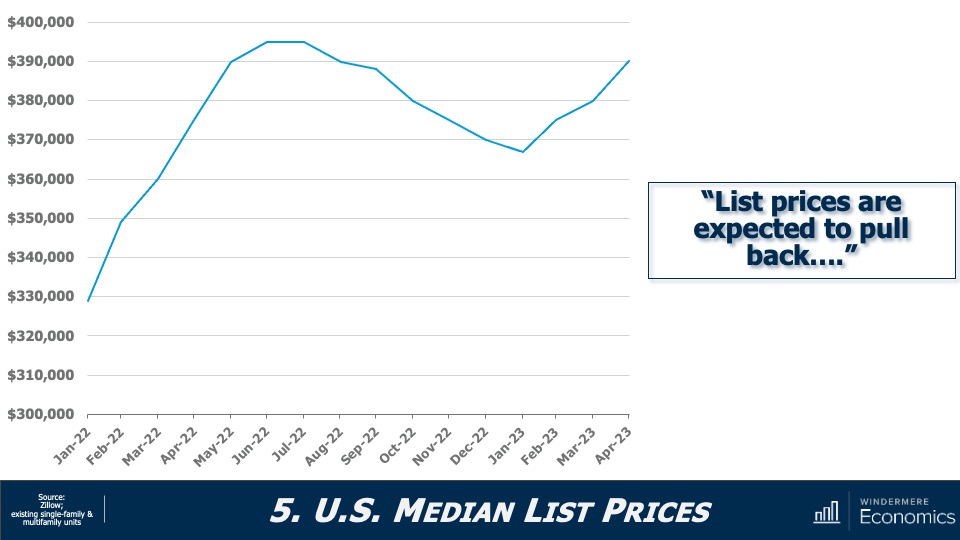
Well, this doesn’t look to be meeting my forecasts, does it! Sellers have been pretty bullish so far this year, but I would add that this is not true across the whole country. List prices are still down significantly in markets such as Hailey, Idaho; Jasper, Alabama; and Elko, Nevada, where list prices for single-family homes are down between 30 and 50% from their peak. So, I admit that the country has outperformed my forecast for list prices.
Return to Office Statistics 2023
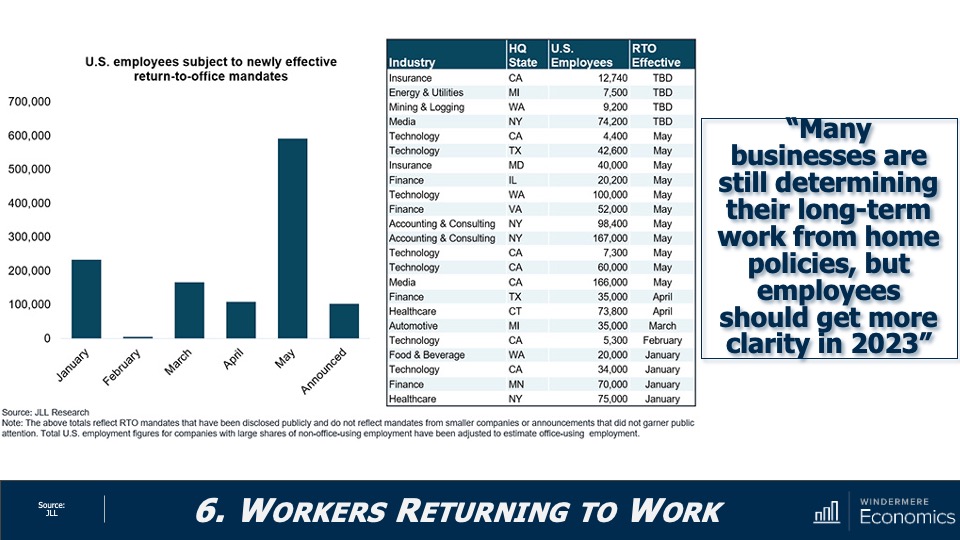
As I had expected, the pace of workers heading back to the office has not been very robust. In fact, the share of people in the office full time dropped to 42% in the second quarter of 2023, down from 49% in the first quarter, that according to The Flex Report. Meanwhile, the share of offices with hybrid work arrangements hit 30% in the quarter, up from 20% the previous quarter. But I still expect to see more workers heading back to their offices, albeit very reluctantly.
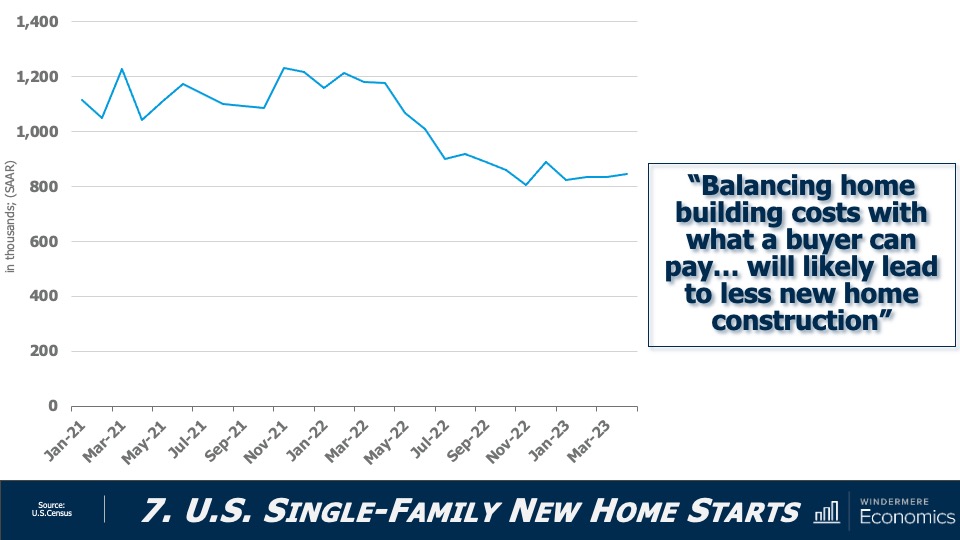
New Home Permits and Starts Have Fallen
With new home permits down 21% year-over-year, and new home starts off by 28%, I think its accurate to say that activity in the new construction sector has slowed. Builders continue to be hit by high financing rates as well as high material prices.
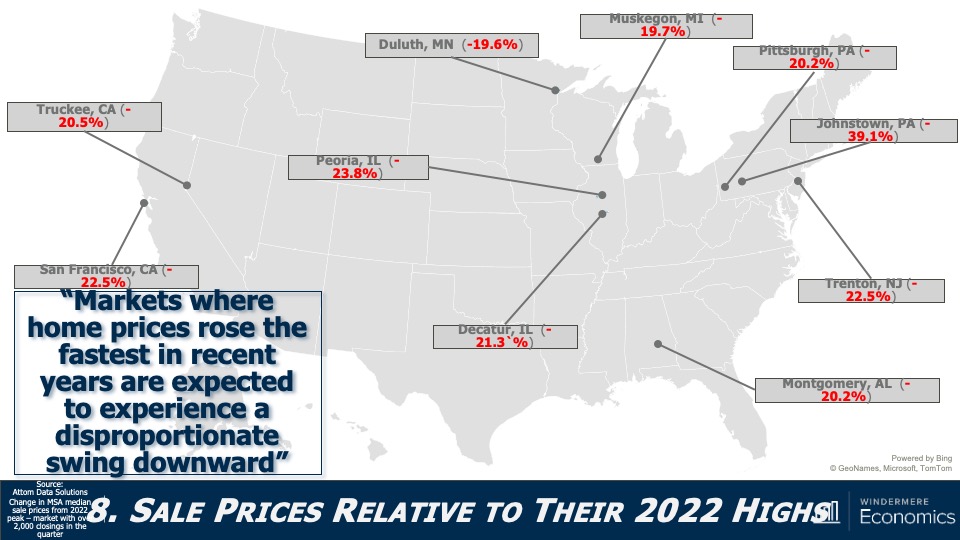
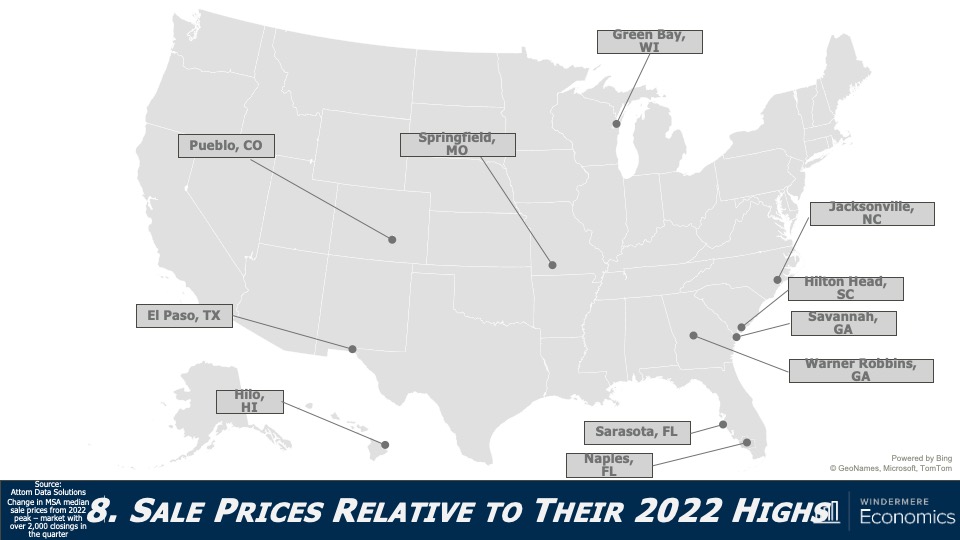
Are U.S. home prices dropping?
As we all know, not all markets are created equal, and this chart shows how far below their 2022 highs some of the country’s metro areas are. On the opposite end of the spectrum, there are some markets where prices have already exceeded the highs seen last year (see map below).
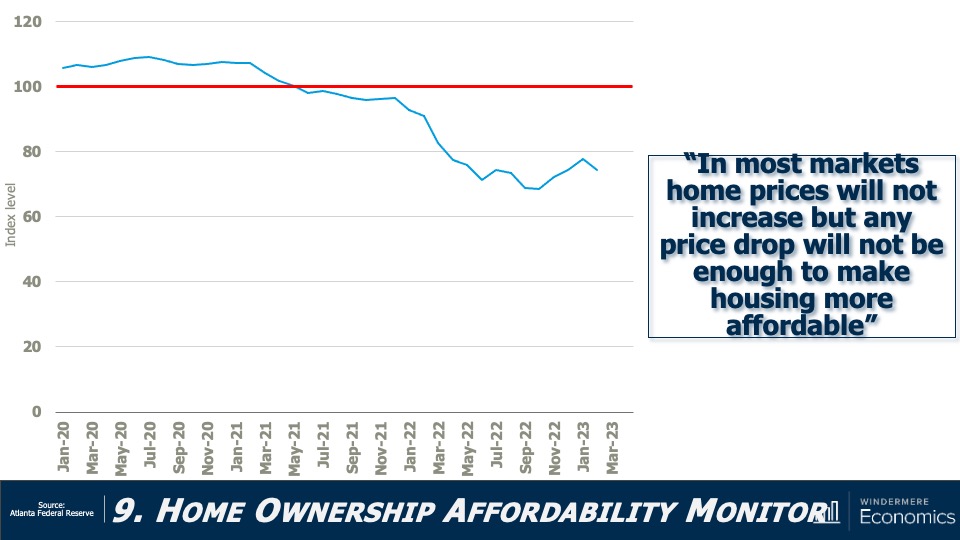
Housing Affordability 2023
Affordability has not improved, mainly due to home prices that remain out of sync with incomes as well as financing costs that remain well above the level that buyers had become used to. I still believe that this will not improve in 2023.
And finally, I told you that governments would start to move to address the significant housing shortage that the country is experiencing, and they have. As you can see, in Washington State, Governor Inslee recently signed House Bill 1110 into law which allows the development of duplex up to six-unit buildings within any area zoned for single-family-only development. Additionally, jurisdictions in a significant number of states are either pursuing legislation to tackle this problem or have at least created task forces to look at the issue. It’s a good start, but more needs to be done.
Although it’s really cheating to grade one’s own work, I think that I have been pretty accurate with my forecasts. Yes, I was too pessimistic when it came to list prices and a little optimistic regarding the direction of mortgage rates. But other than those two items, the data seems to suggest that the housing market is headed in the direction that I had suggested.
What do you think? I’d love to hear your thoughts on this subject so leave your comments below. As always, stay safe out there and I’ll see you all next month. Bye now.
To see the latest real estate market data for your area, visit our quarterly Market Updates page.
About Matthew Gardner
As Chief Economist for Windermere Real Estate, Matthew Gardner is responsible for analyzing and interpreting economic data and its impact on the real estate market on both a local and national level. Matthew has over 30 years of professional experience both in the U.S. and U.K.
In addition to his day-to-day responsibilities, Matthew sits on the Washington State Governors Council of Economic Advisors; chairs the Board of Trustees at the Washington Center for Real Estate Research at the University of Washington; and is an Advisory Board Member at the Runstad Center for Real Estate Studies at the University of Washington where he also lectures in real estate economics.
Thinking about selling your home? You’ve likely got a thousand questions swimming around in your head, but there’s one that tends to stick out in homeowners’ minds above the others: What’s my home worth? Your real estate agent will be your greatest resource in answering this question once you’ve decided you’re ready to sell your home, but knowing how to research home prices on your own beforehand will help to inform those conversations. Here are some of the ways you can make good use of your time before you put your home on the market.
What’s your home worth?
Automated Valuation Models (AVMs) are a great first step in understanding home value but aren’t nearly as comprehensive as your agent’s market analysis. They compare your home against other comparable listings in your area to estimate your home’s selling price. Windermere’s Home Worth Calculator evaluates your property and the surrounding market to give you an idea of what your home is worth. Try it here:
How to Research Home Prices
Though AVMs help you research home prices, to say they’re 100% accurate is one of the most common myths of the selling process. To fully understand what your home is worth, you need a real estate agent’s expertise. They’ll conduct a comprehensive Comparative Market Analysis (CMA) to accurately and competitively price your home. An agent’s CMA compares your home to similar listings in your area, sifting through tons of data on the Multiple Listing Service (MLS), a huge network where agents can share information regarding available listings. Here, your agent can maximize the visibility of your listing and easily connect with buyer’s agents to start a conversation about buying your home.
Local Real Estate Market Conditions
Your local real estate market conditions should be a point of emphasis in your pre-selling research. Generally speaking, there are three types of markets you could be faced with as a seller: a seller’s market, a buyer’s market, and a balanced market. Each market will have different implications for how you and your agent approach negotiations, how you interpret buyers’ offers, and your philosophy regarding the terms of common real estate contingencies tied to different offers. And maybe of greatest relevance to you, knowing more about your local market conditions will help you understand a bit more about what price your home could sell for. To see the latest housing data on home prices, home sales, and more in your area, visit our Market Updates page:
Besides all the number-crunching, some of the most helpful research you can do on your own is finding the right real estate agent. Getting referrals from family members or friends is a great starting point, but it’s still worth it to make sure the agent is right for you. Yes, their business acumen should be a priority, but remember that you’ll be together through all the ups and downs of the selling process, so it’s just as important that you connect on a personal level as well. If you’re looking for an agent with a specific specialty, identify professionals that have the certifications and designations to match.
Once you’re ready to sell your home, connect with a local Windermere real estate agent to begin your selling journey!
Original post by Sandy Dodge
Interior design solutions come in all shapes and sizes. After all your furniture items, art, and other physical items are all in their right place, decorating with house plants can provide the perfect final touch. The best plants for your home are the ones that will thrive in your local climate while complementing your existing décor. Here are a few common house plants and their corresponding interior design styles to aid your decorating efforts.
Decorating with House Plants to Match Your Décor Style
Mid-Century Modern
Mid-century modern interior design is ubiquitous, and for good reason. Its simple concepts, open spacing, and emphasis on natural elements make it one of the premier interior design styles for homeowners and design experts alike. A Split-Leaf Philodendron, or “Swiss cheese plant,” is ideally suited for these interior spaces, and its signature leaf holes make it a visual focal point. Swiss cheese plants will thrive in open spaces with access to natural light, climbing toward the ceiling as space allows. For the same reasons, Fiddle-Leaf Figs feel at home in a mid-century modern aesthetic.
There’s an inherent give and take with industrial interior design in that it foregoes traditional elements that we associate with comfort for stylistic choices that create a strict-yet-visually appealing environment. Decorating with house plants can add vibrance to an industrial backdrop of wood, steel, brick, stone, and copper without compromising the edginess of the style. Both Snake Plants and Cast Iron Plants will harmonize with an Industrial space. Both are low-maintenance plants that mesh well with materials that evoke toughness and durability.
Minimalist
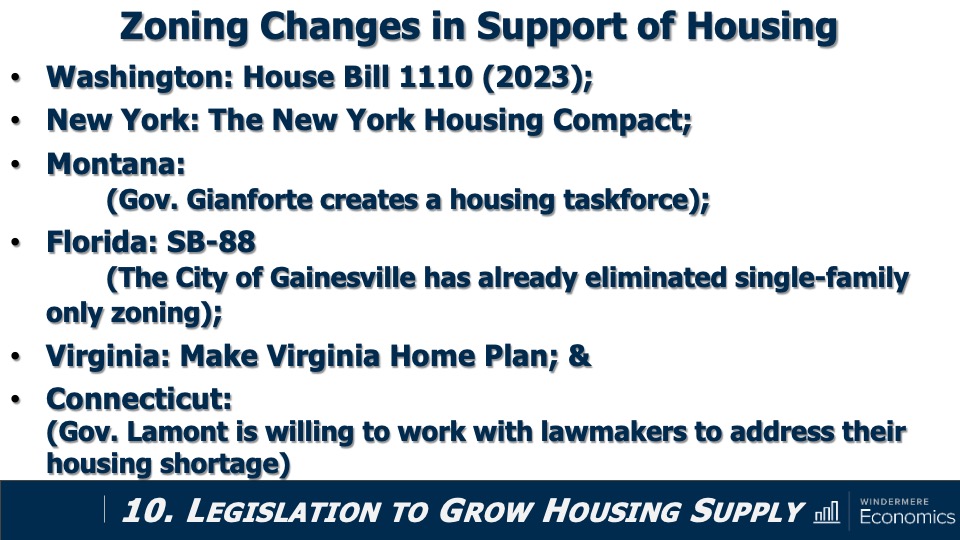
The combination of minimalism and house plants is a match made in heaven. Given minimalism’s focus on the reduction of waste and clutter and the importance of bringing the outdoors in, all signs point toward decorating with house plants. Being selective about which plants you include will keep everything in line with the fundamental concepts of minimalism—too many plants and things would easily feel off balance. Large-leaf plants are a perfect solution for minimalist decorators, such as Rubber Plants, Bird of Paradise, and Silver Evergreen.
The Farmhouse interior styleprioritizes cleanliness and an inviting spirit. Its white-washed backdrop of whites, grays, and beiges makes it a fitting canvas for the lush green additions that a selection of house plants can provide. Spider Plants work well to fill shelf space, which come in both solid green and white-striped varieties. These plants are easy to take care of and thrive in partial sun or shade. Aloe Vera plants in the kitchen can refresh the look of your shelving or counter space.
Homeowners withtraditionally styled interiorshave a whole host of options to choose from. Any classic plant species will complement its traditional surroundings, but more specific choices can bring out the uniqueness in your home. If your decorations are rife with patterns and geometric shapes, perhaps a fern or Amazon Lily would help to balance the room. Bamboo may be a natural fit for your home depending on your existing décor. If you’re looking for a hanging display to fill empty wall space, consider Devil’s Ivy.
As always, research the watering and sunlight needs of a house plant before bringing it into your home. For more on decorating with house plants, be sure to read our room-by-room guide:
A sun-drenched home in Somerset offers southern exposure and golf course views, streaming with light. Traditional two-story floor plan with fully finished daylight basement. Plenty of room for all with 5 bedrooms, 3.5 baths, and 3860 sq ft. The kitchen with eating space opens to the family room and spacious deck overlooking the view. Formal living room and dining room. Primary en-suite with walk-in closet, vaulted ceilings, and updated bath. The lower level includes a guest suite and a huge bonus room ready for game day or movie night! Fenced flat backyard. All this plus Bellevue’s top schools, Somerset, Tyee Newport. Check it out!
Nestled on one of the most desirable streets, this sophisticated & elegant NW traditional home features expansive views with total privacy. Enjoy everyday living & entertain effortlessly with sweeping city, lake & mountain views from practically every room. Just a few of the notable finishes: natural cherry cabinetry, chef’s kitchen with high-end appliances, high ceilings & walls of windows. Generous primary suite with stunning views & spa-like en-suite bath. Complete w/3 additional bedrooms, office, huge bonus room & more. Mature landscaping, putting green & expansive decks create an outdoor sanctuary. Wonderful community, convenient to everything including top Bellevue Schools. You’ll love it here!
Please join us:
1pm-3pm Saturday, 6/11
1pm-3pm Sunday, 6/12
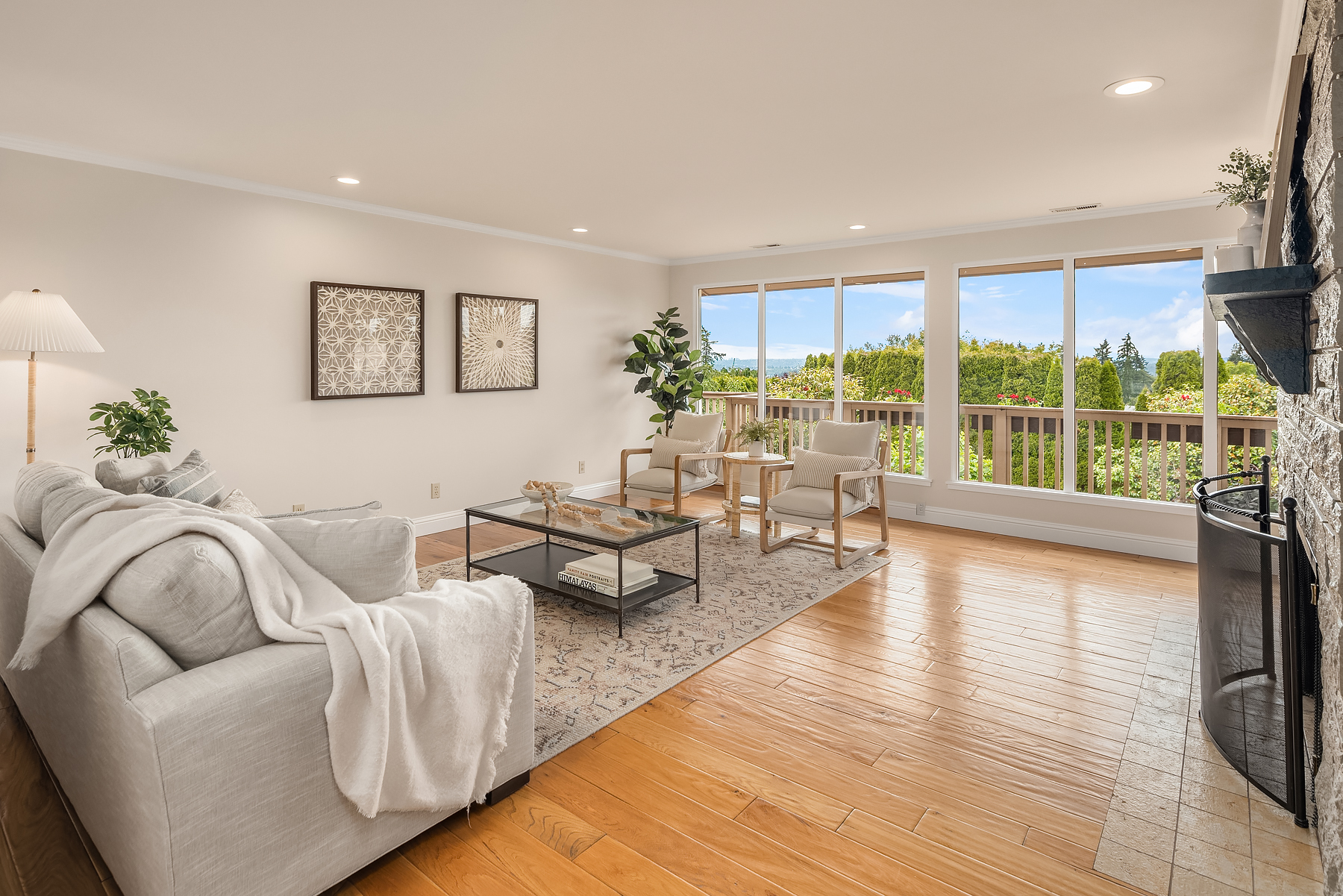
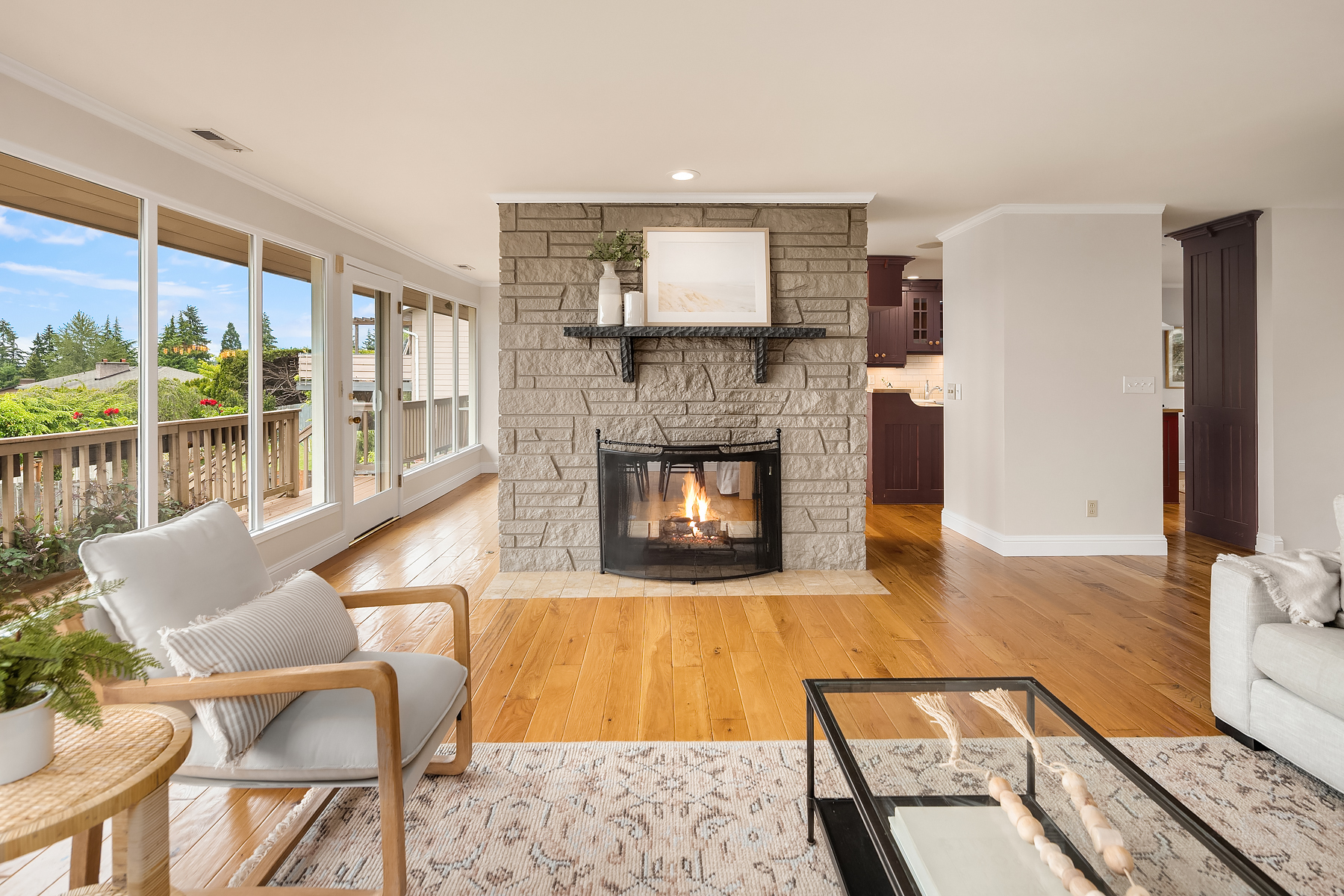
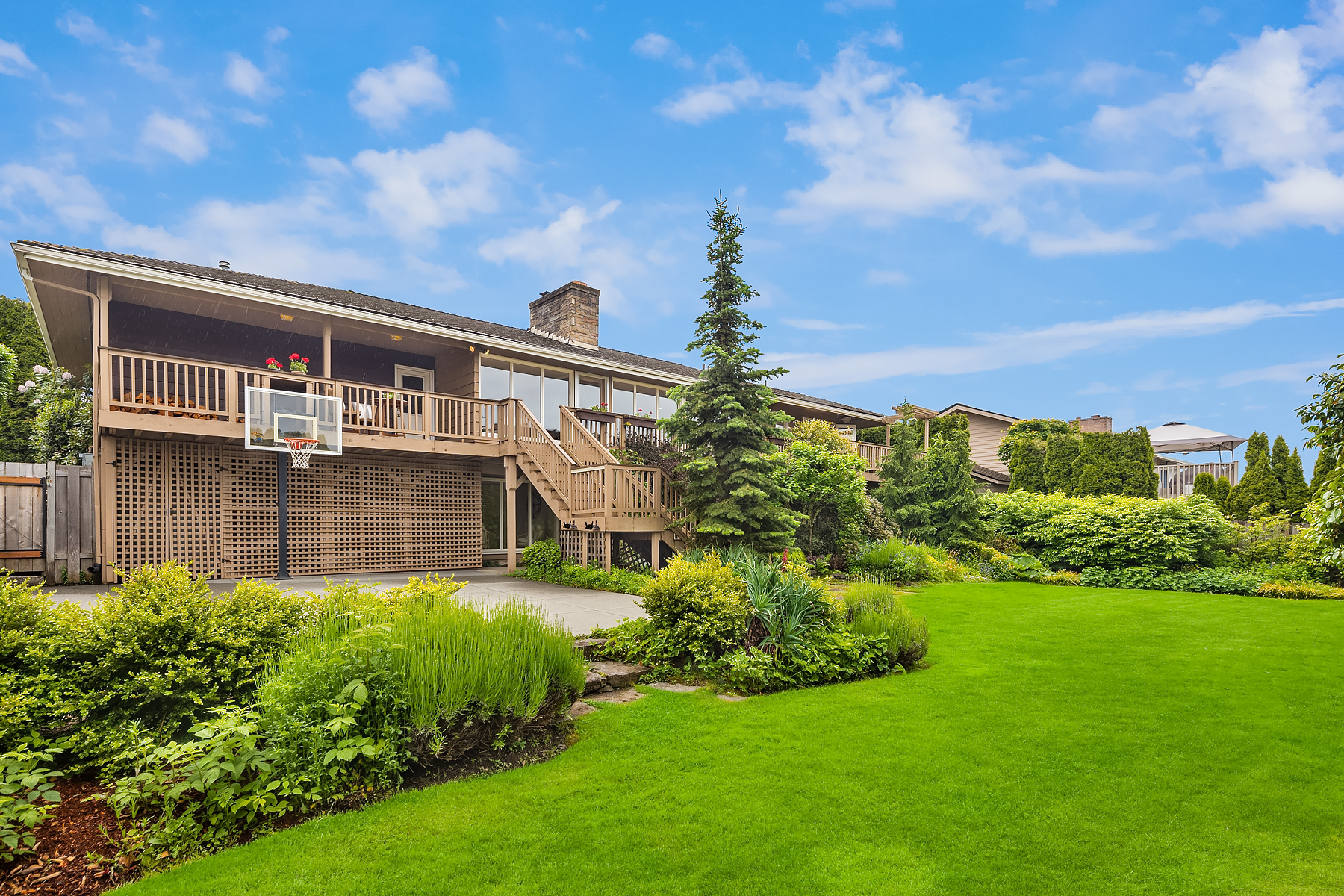
You know it the moment you walk in, this is the home you’ve been waiting for. City and Mountain views set the backdrop for this lovingly cared-for Somerset home. With a centerpiece fireplace, the circular floorplan easily accommodates gathering friends for game night or a meal around the table. A wall of windows naturally draws you outdoors to the park-sized level yard w/perennial gardens, a sports court, and your deck overlooking it all. Quality built mid-century basement rambler with ideal floor plan. Daylight lower level offers plenty of space for fun and function – crafting, creating, working, or relaxing, there is room for it all. Conveniently located to downtown corridors, tech work centers, & top Bellevue Schools. Hurry on this one!