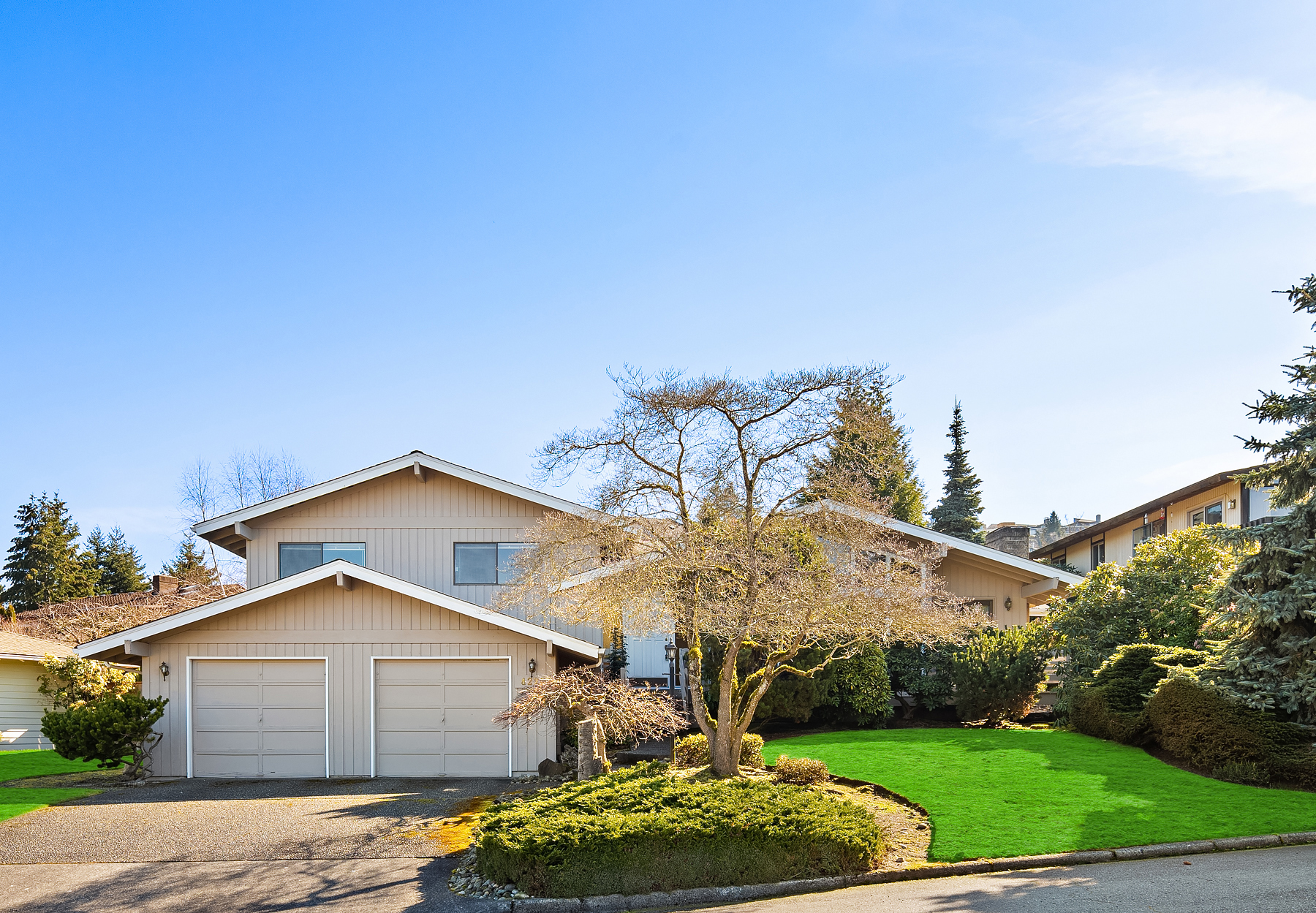
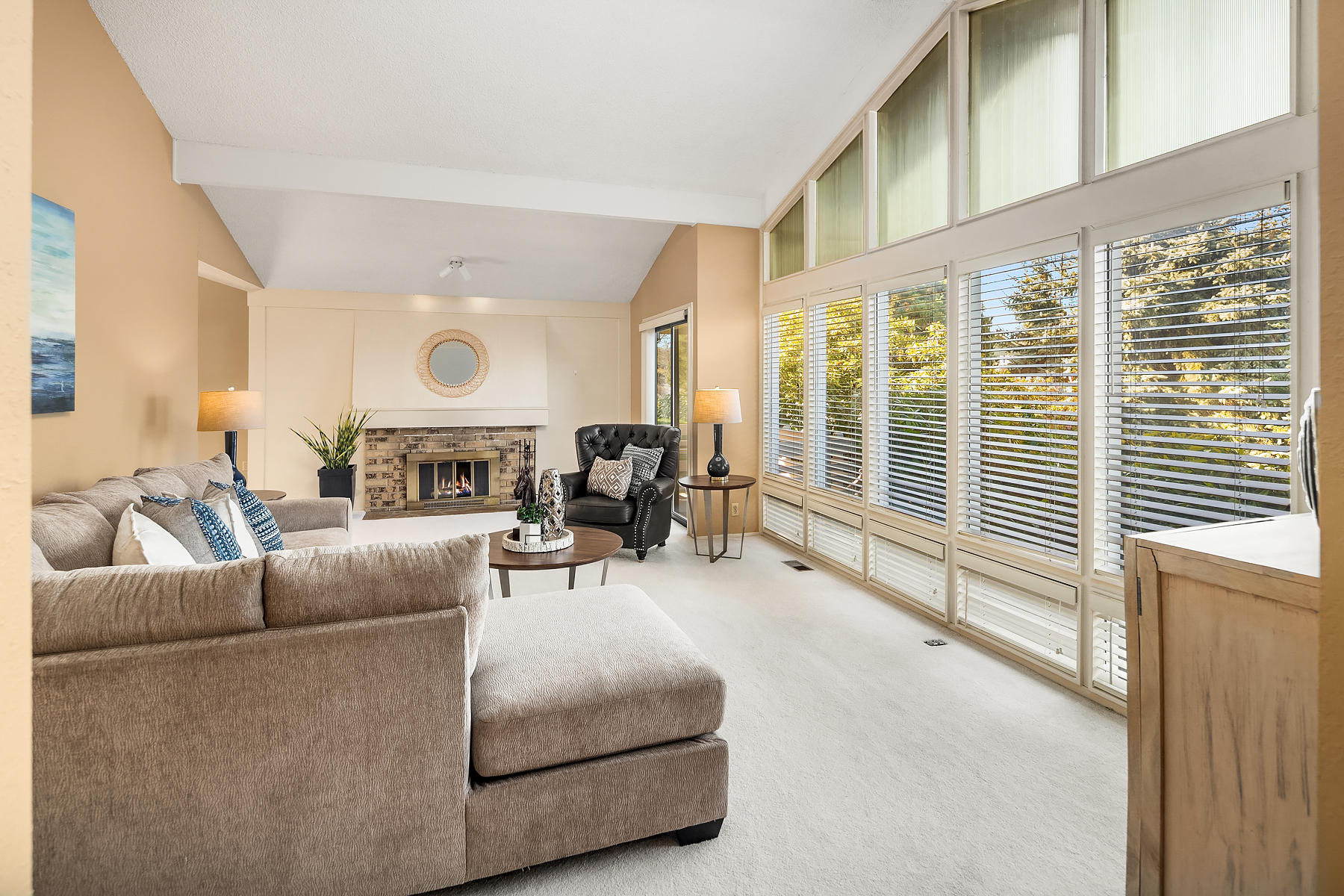
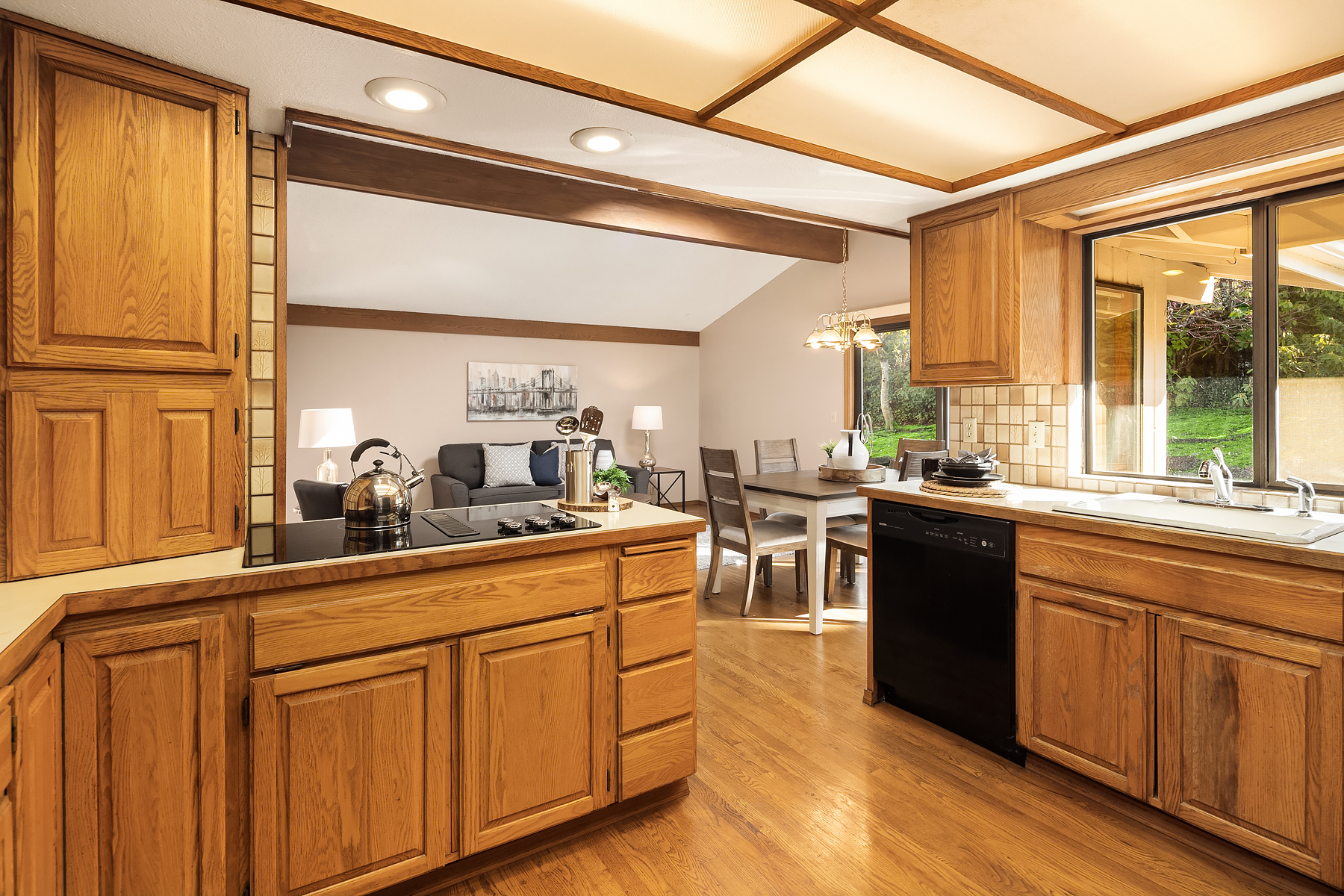
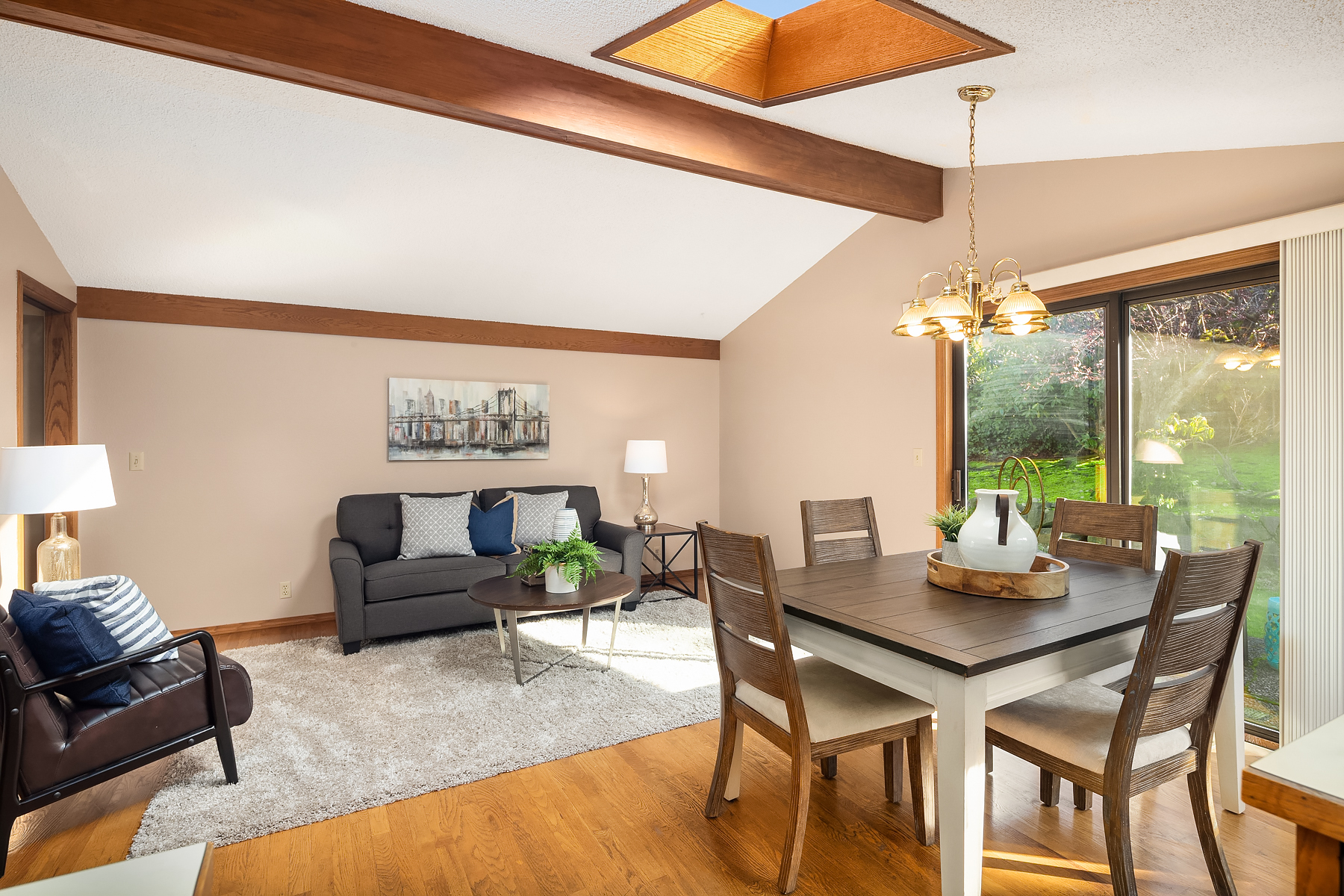
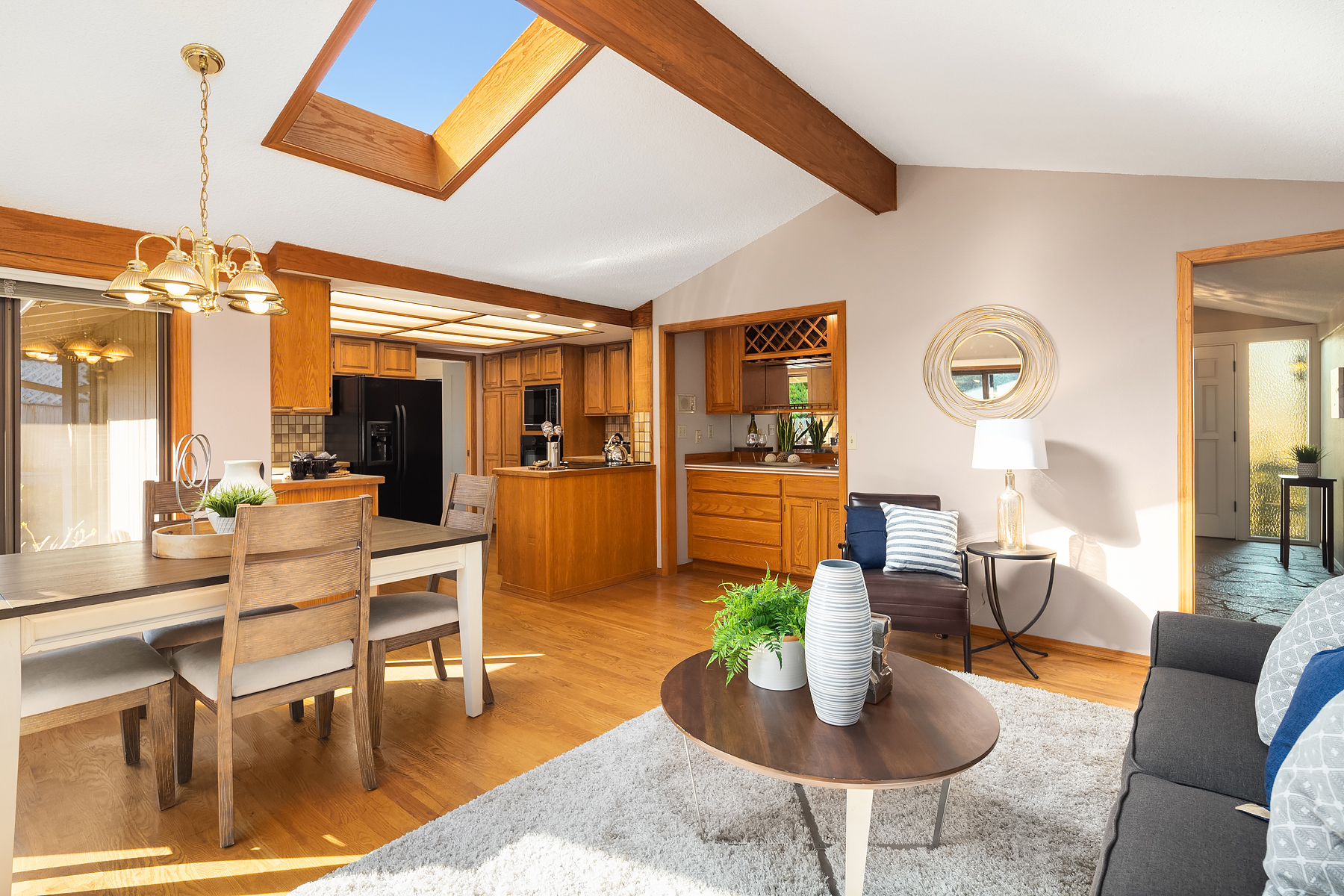
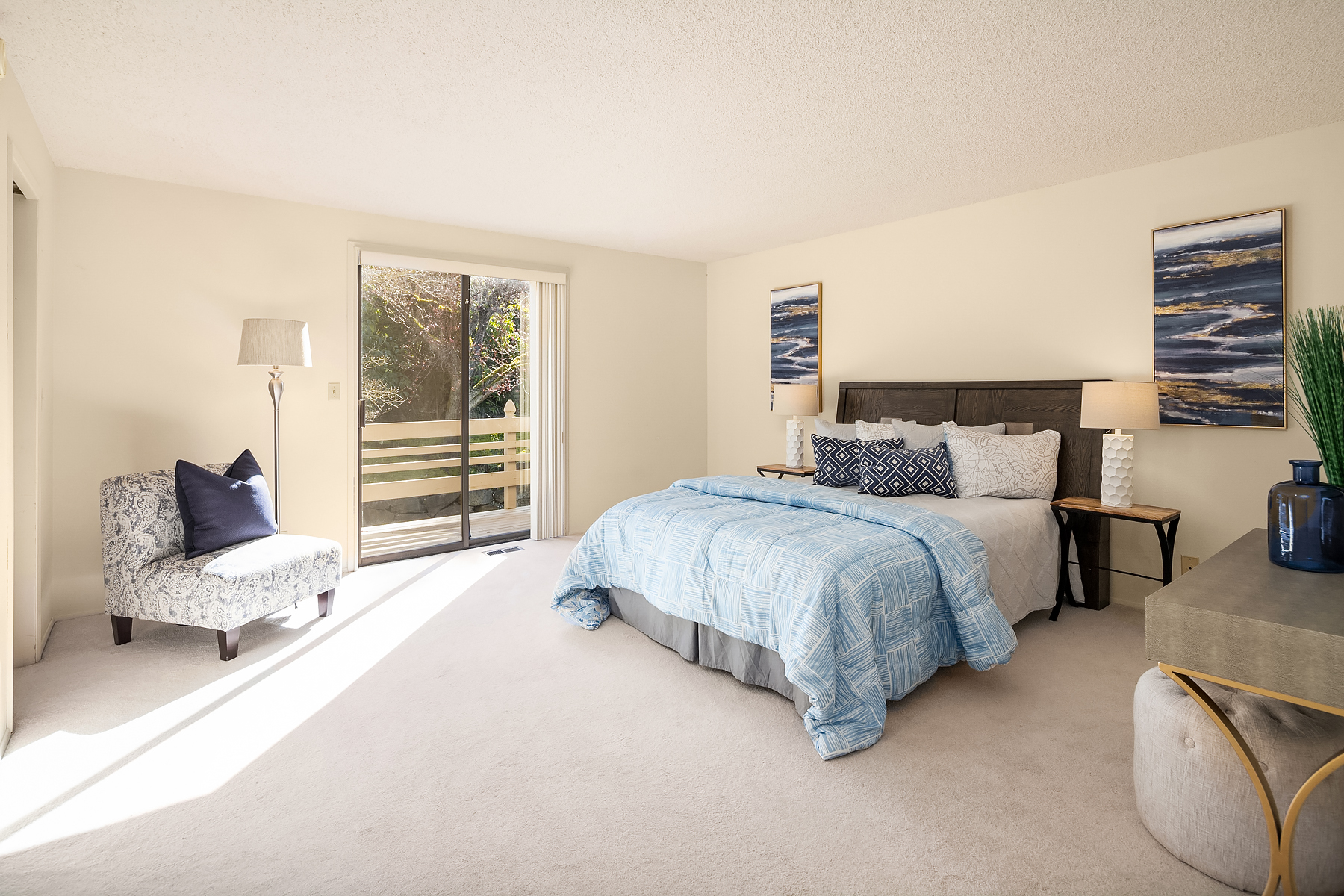
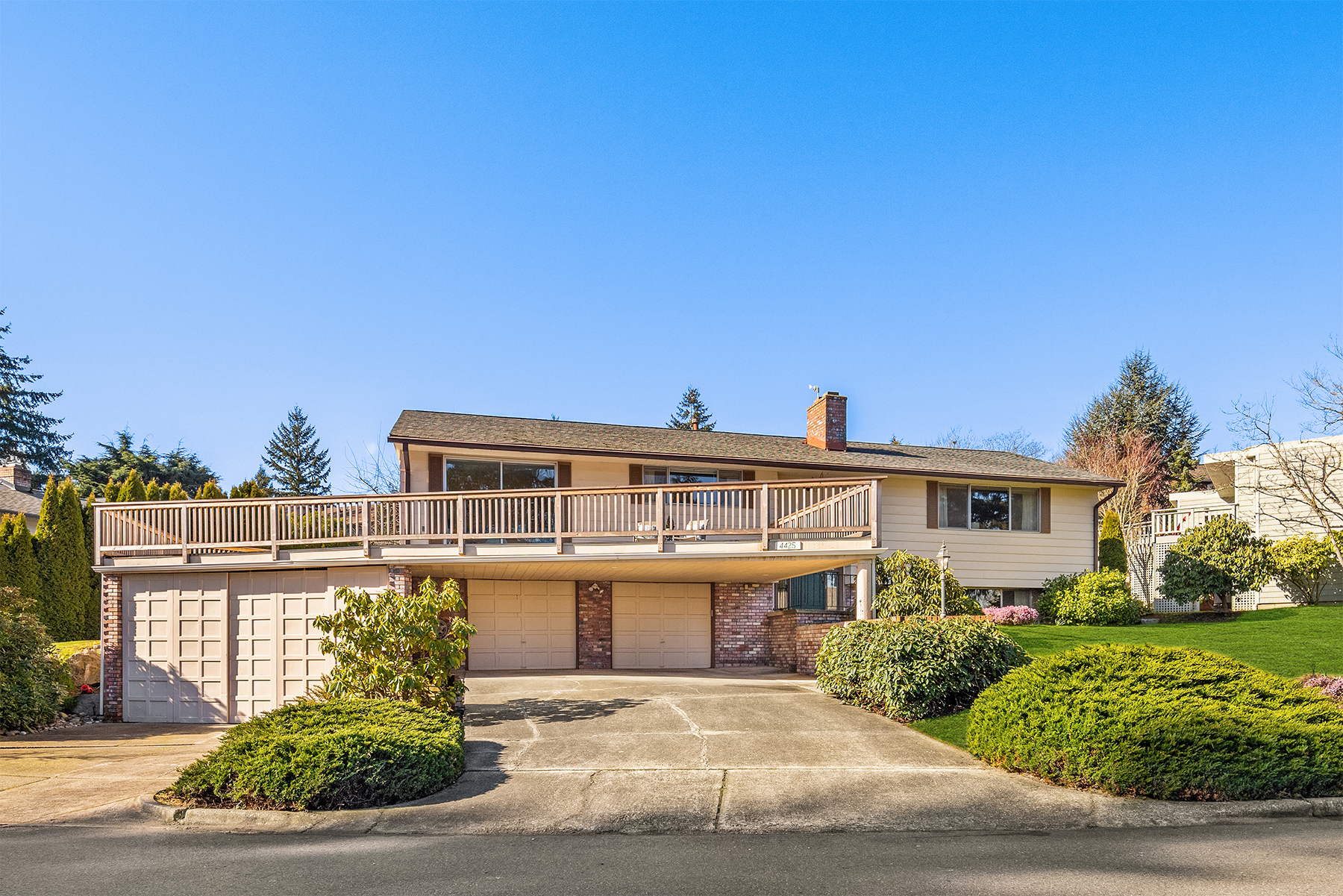
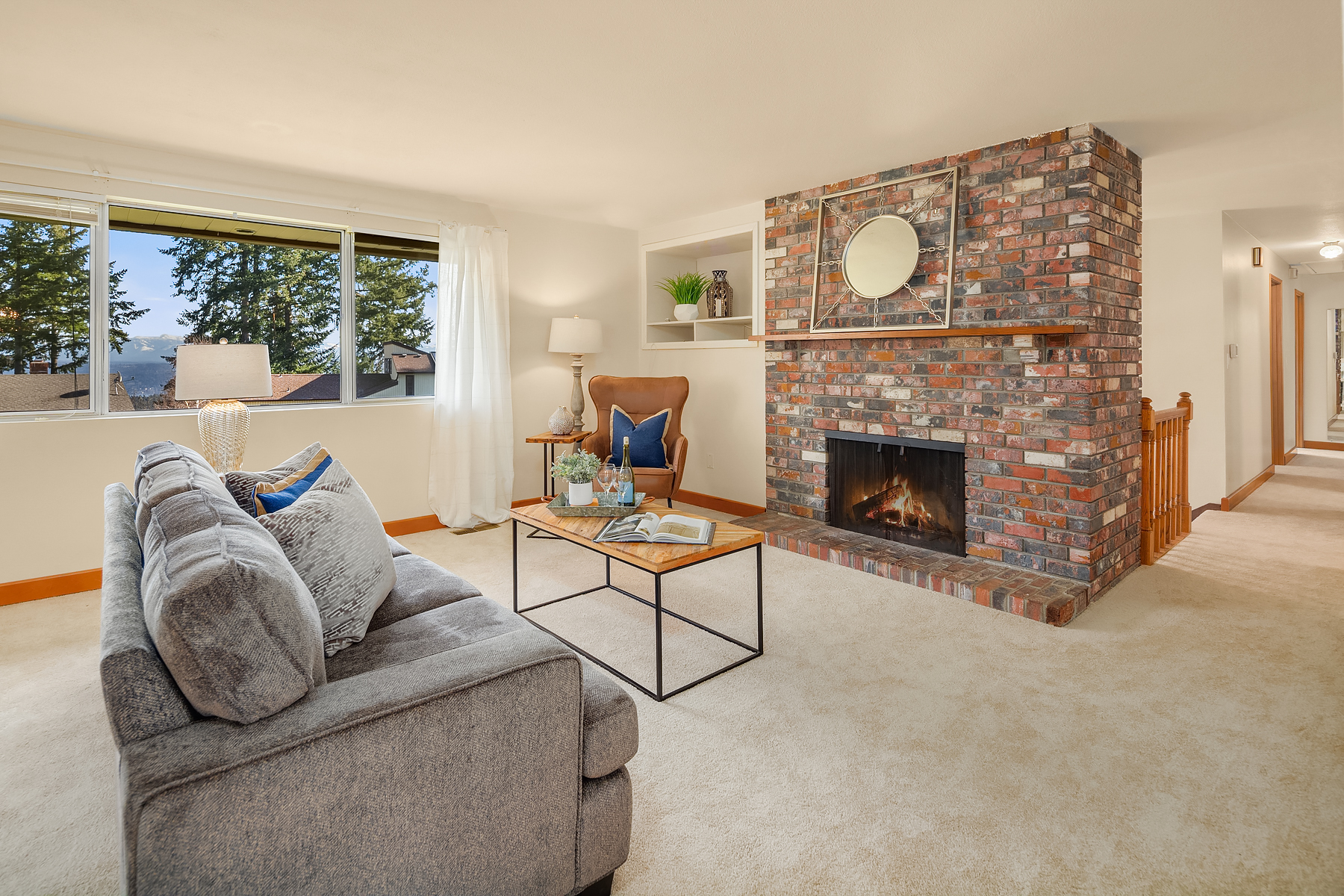
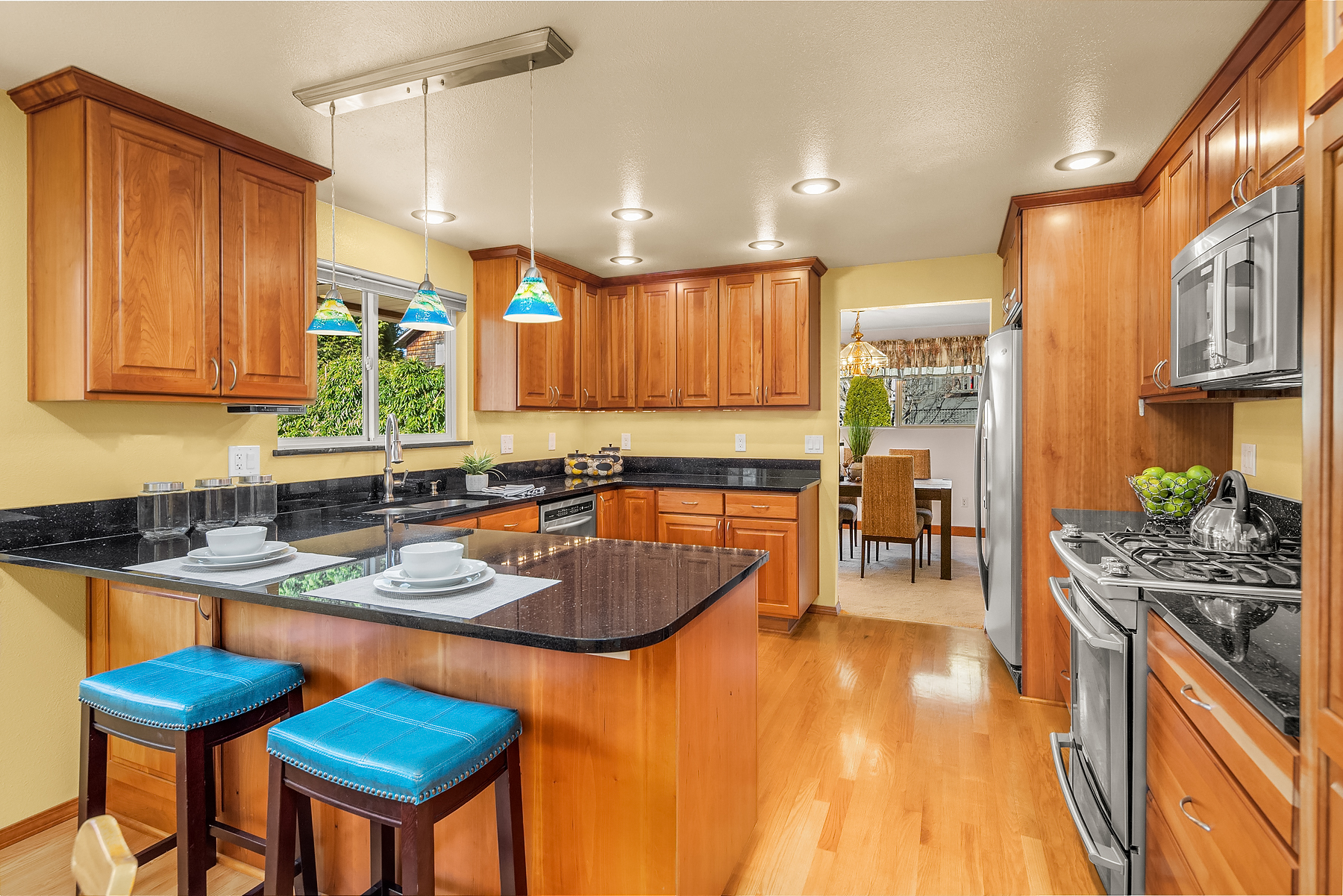
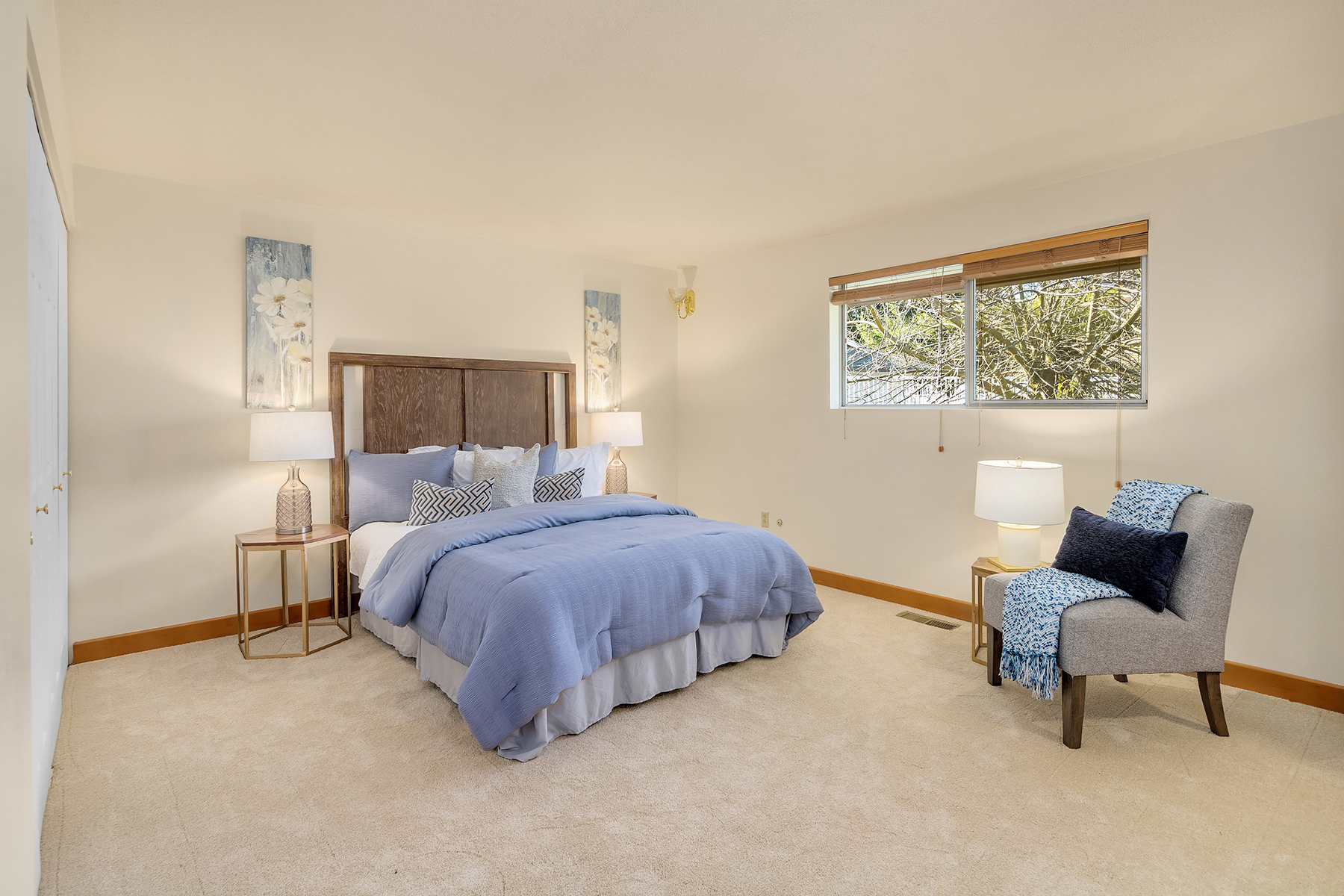
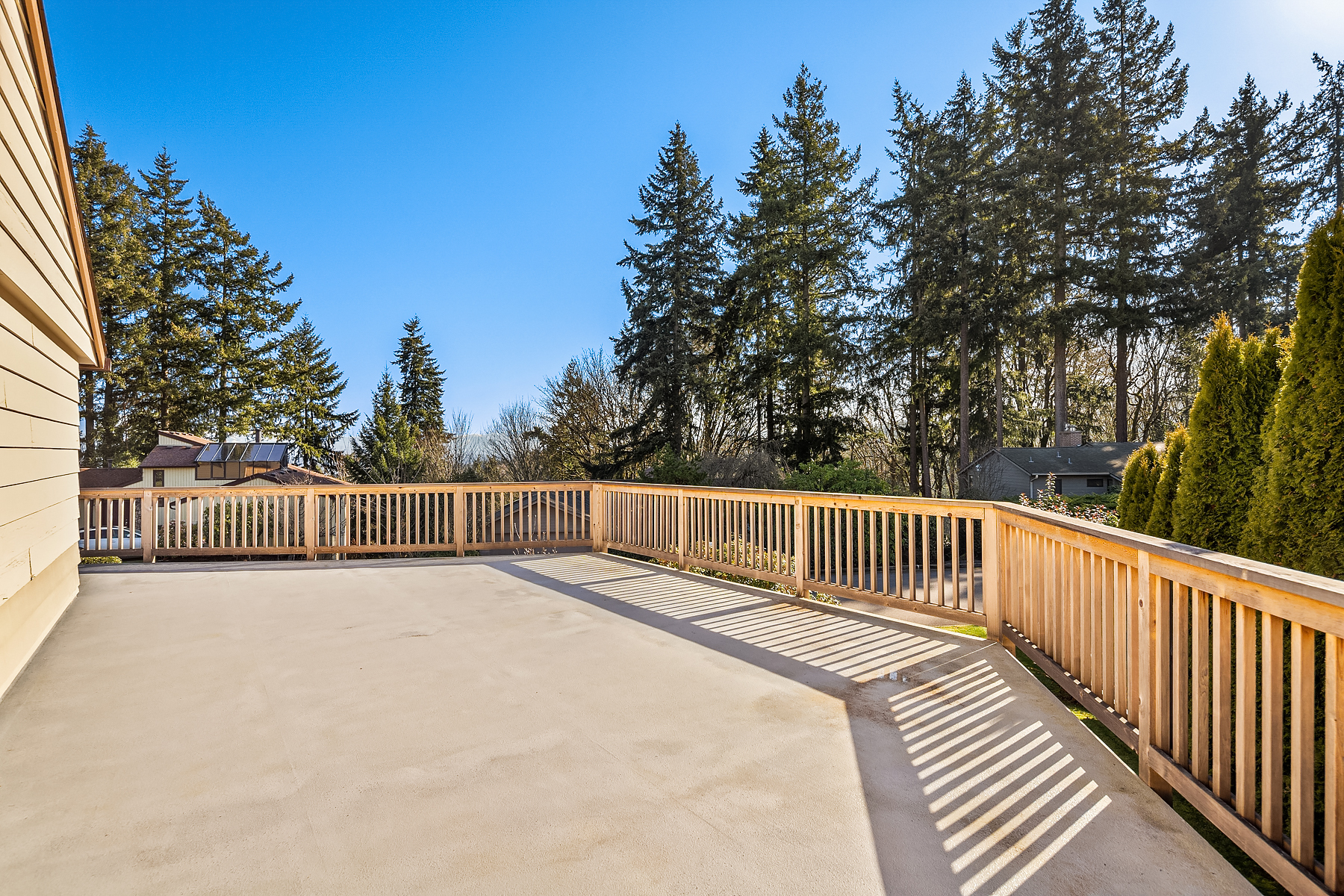
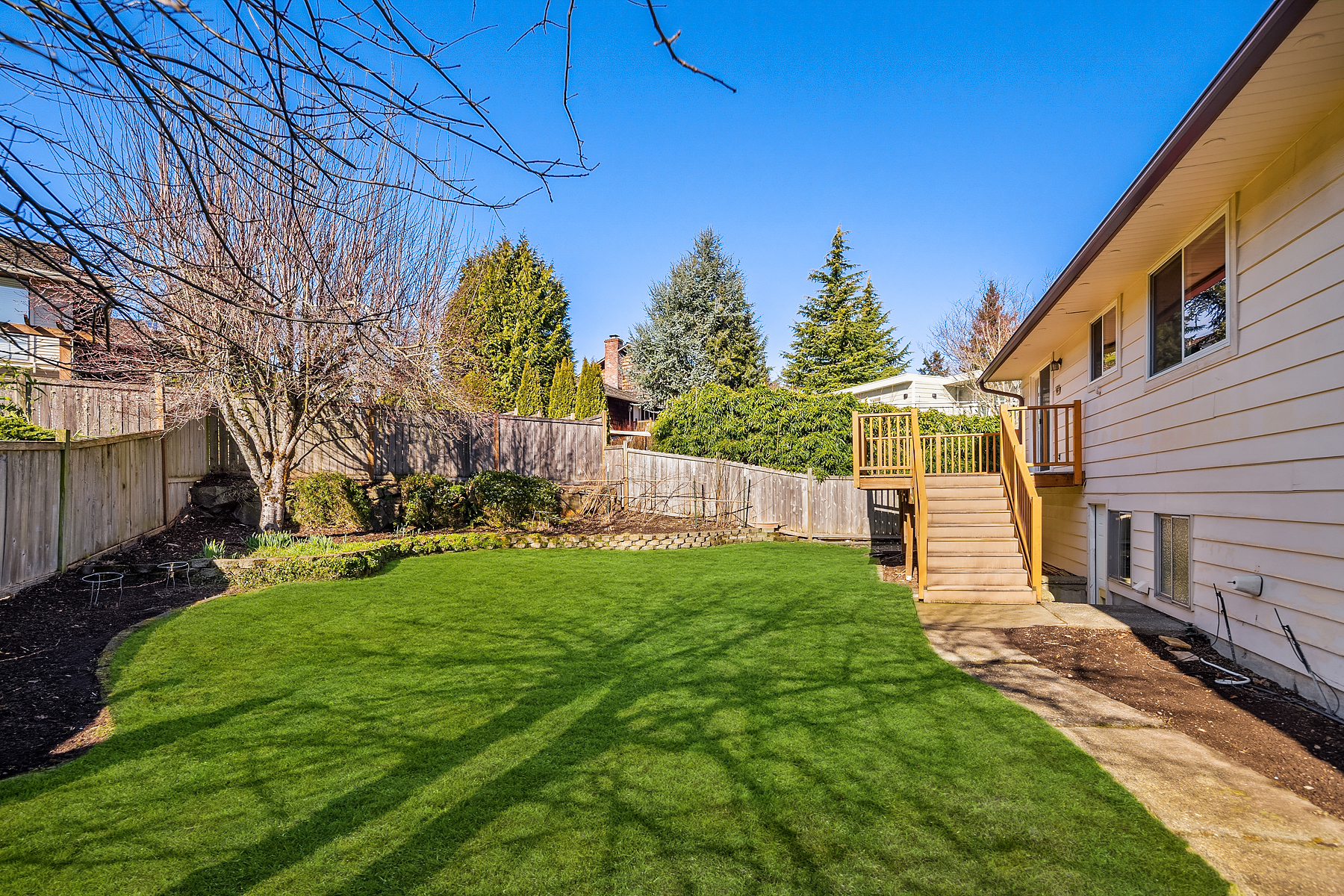
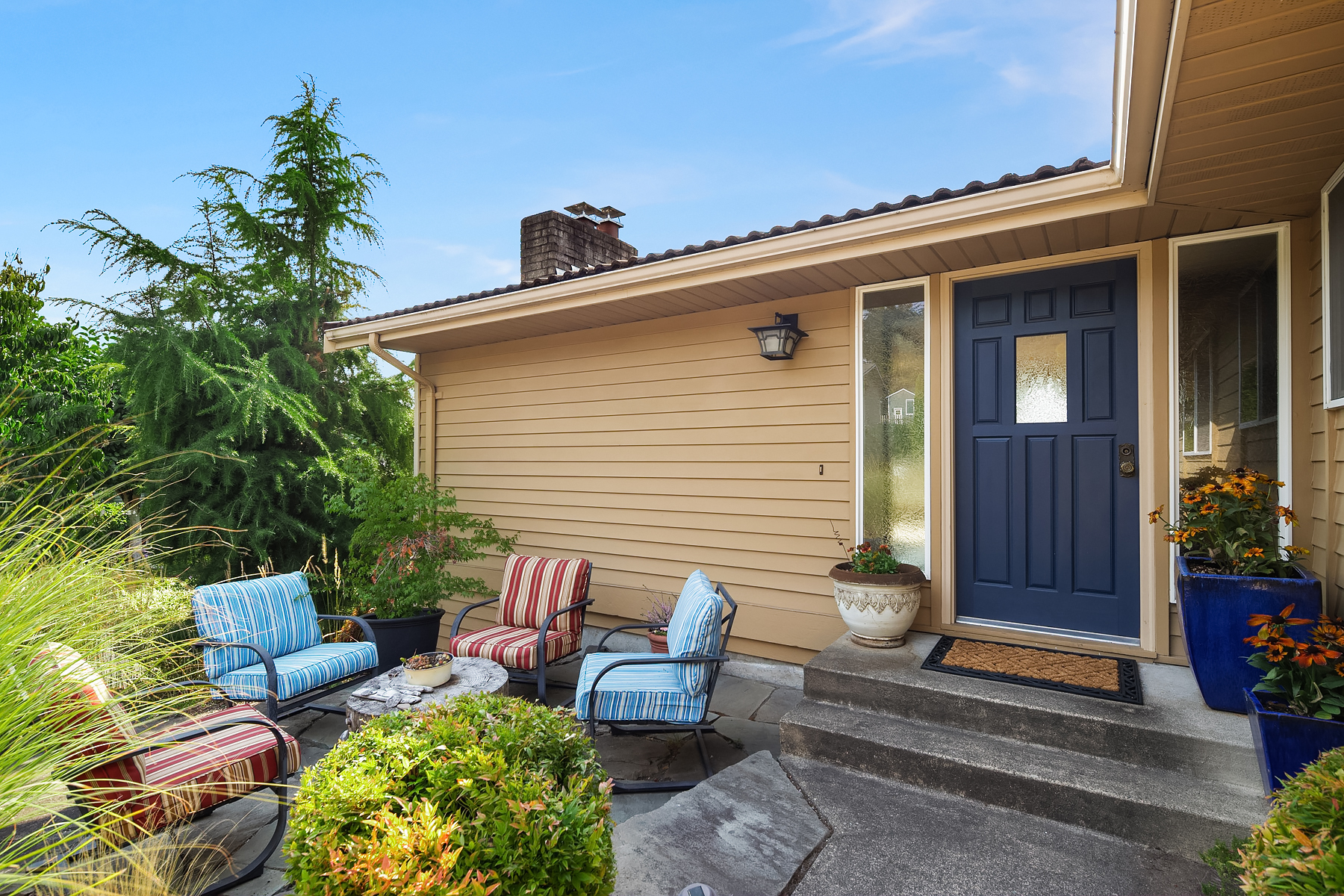
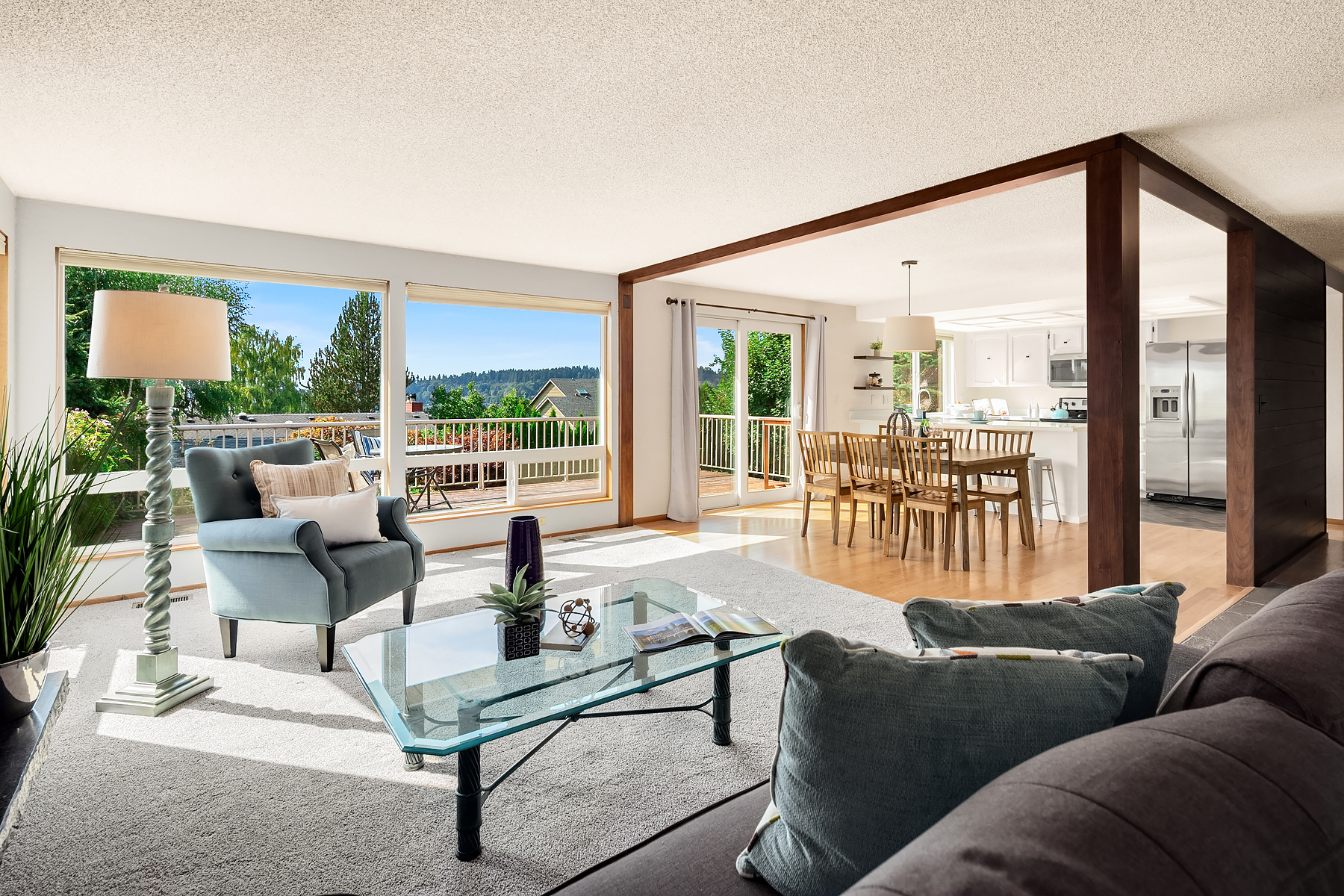
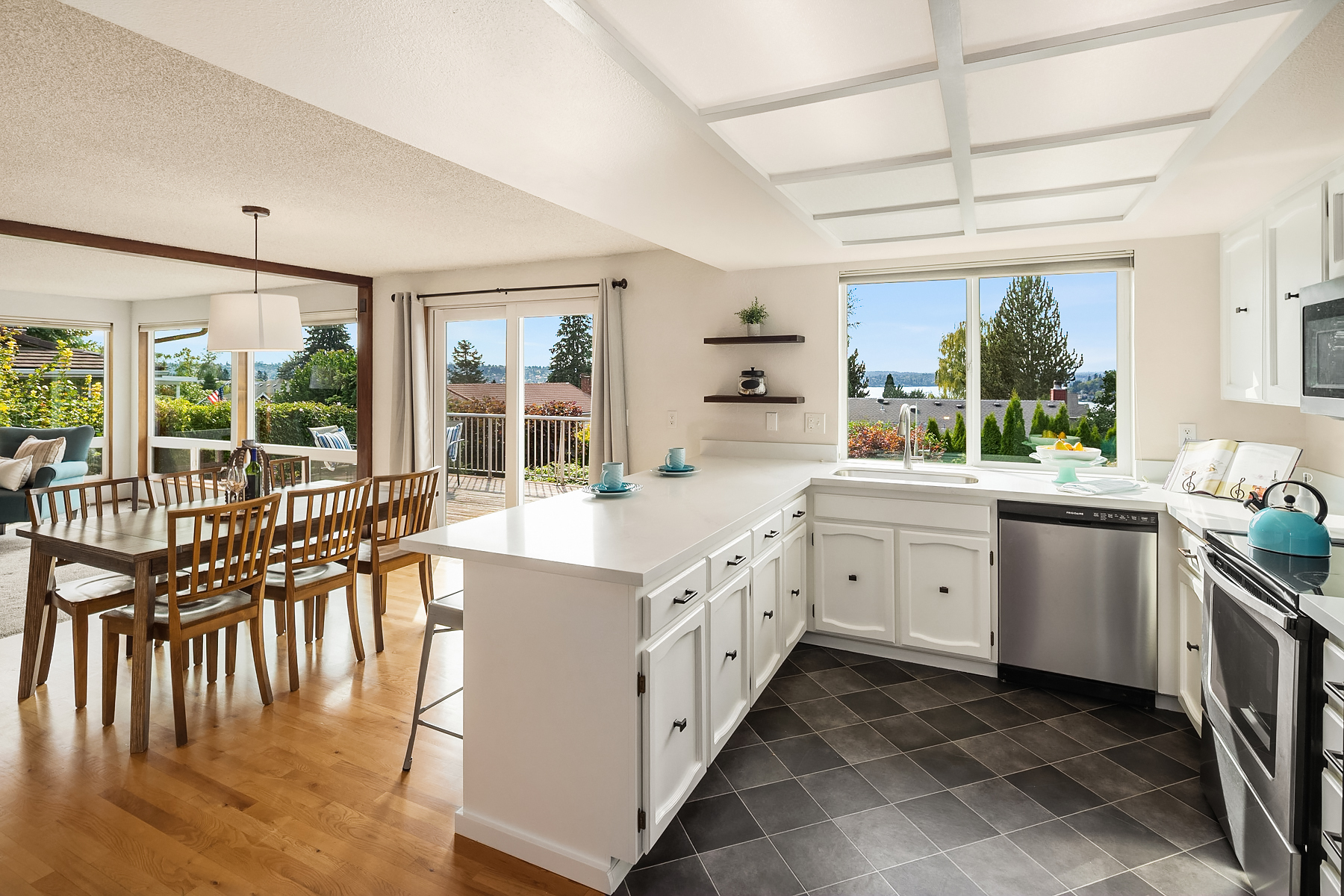
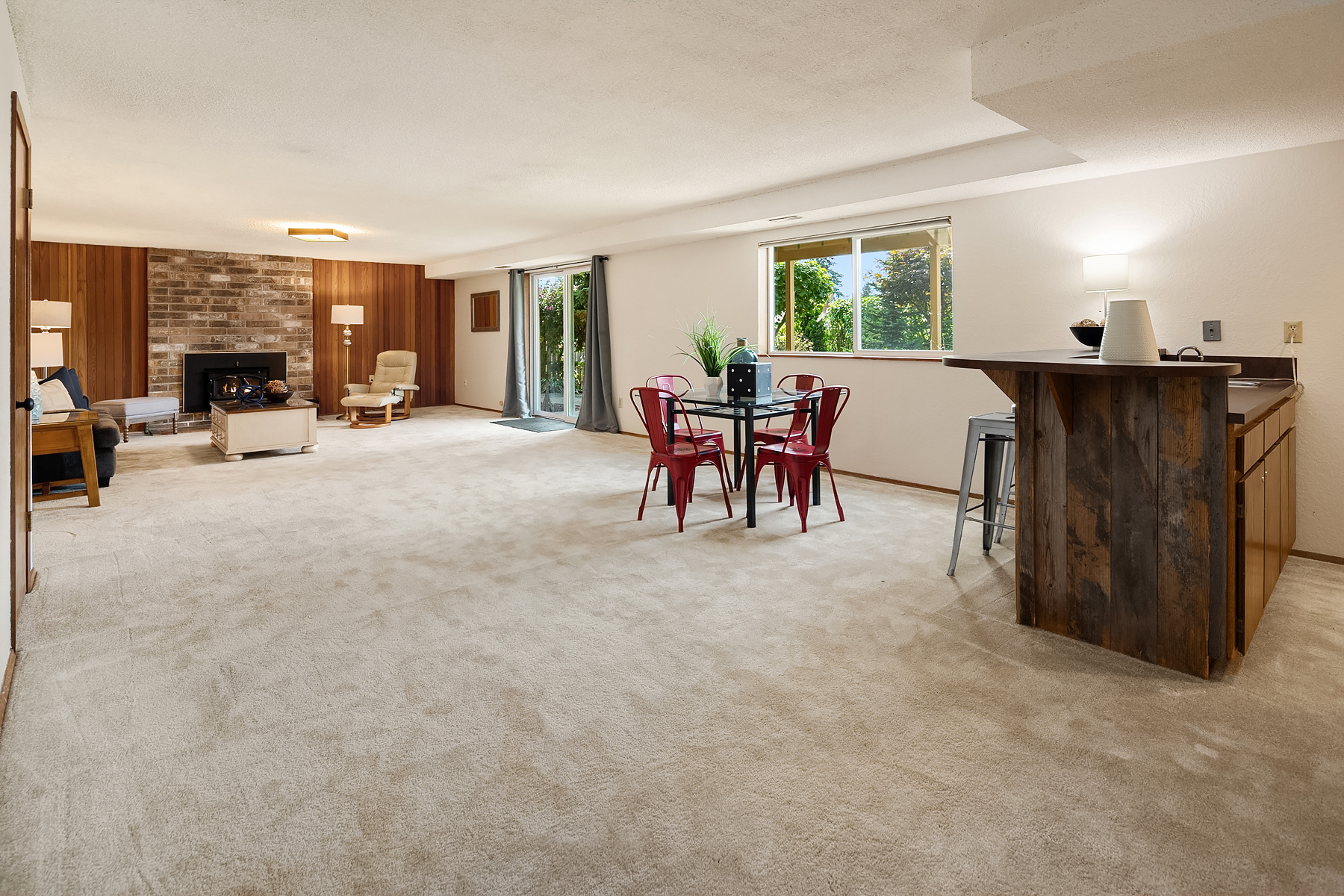
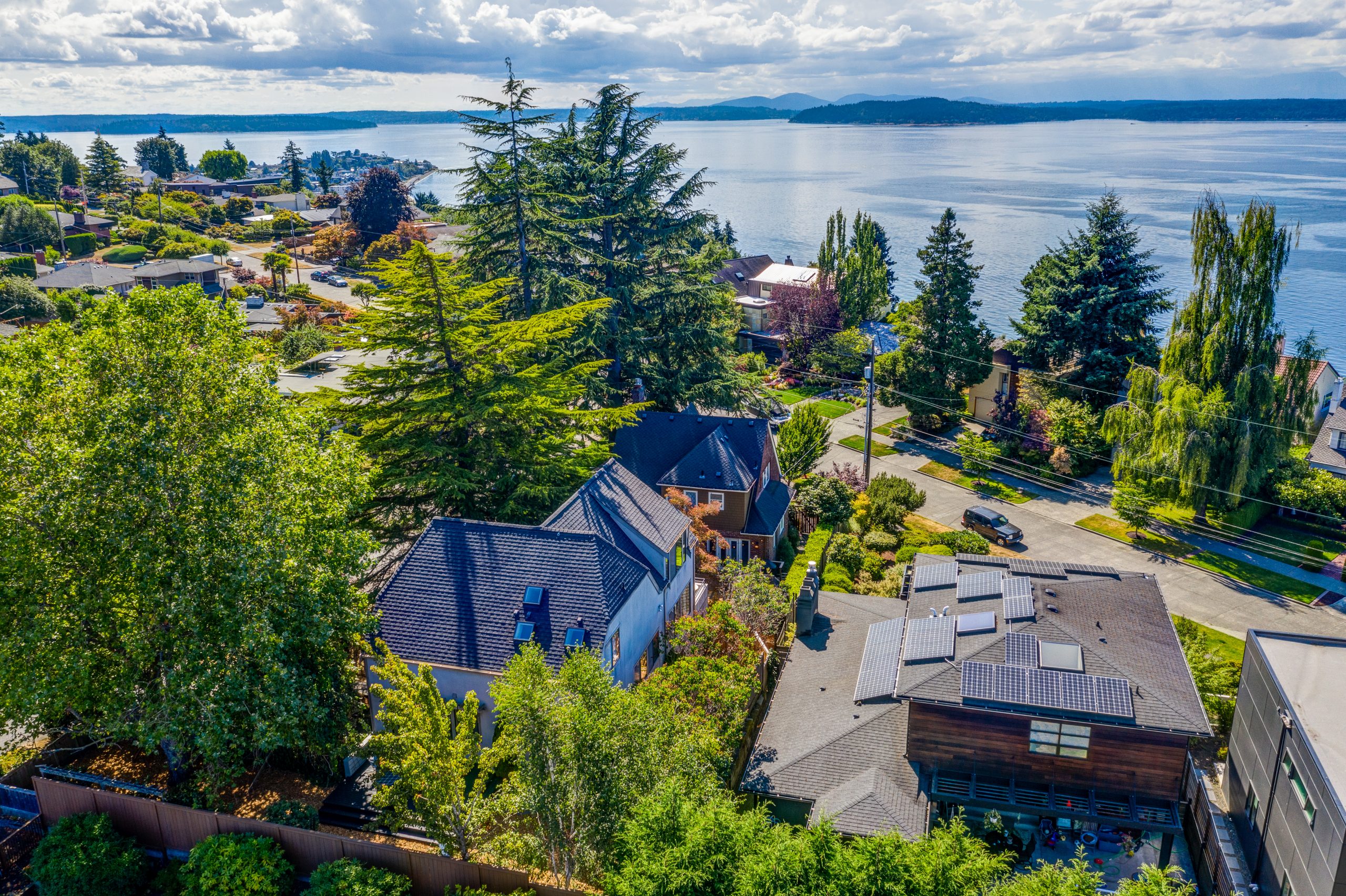
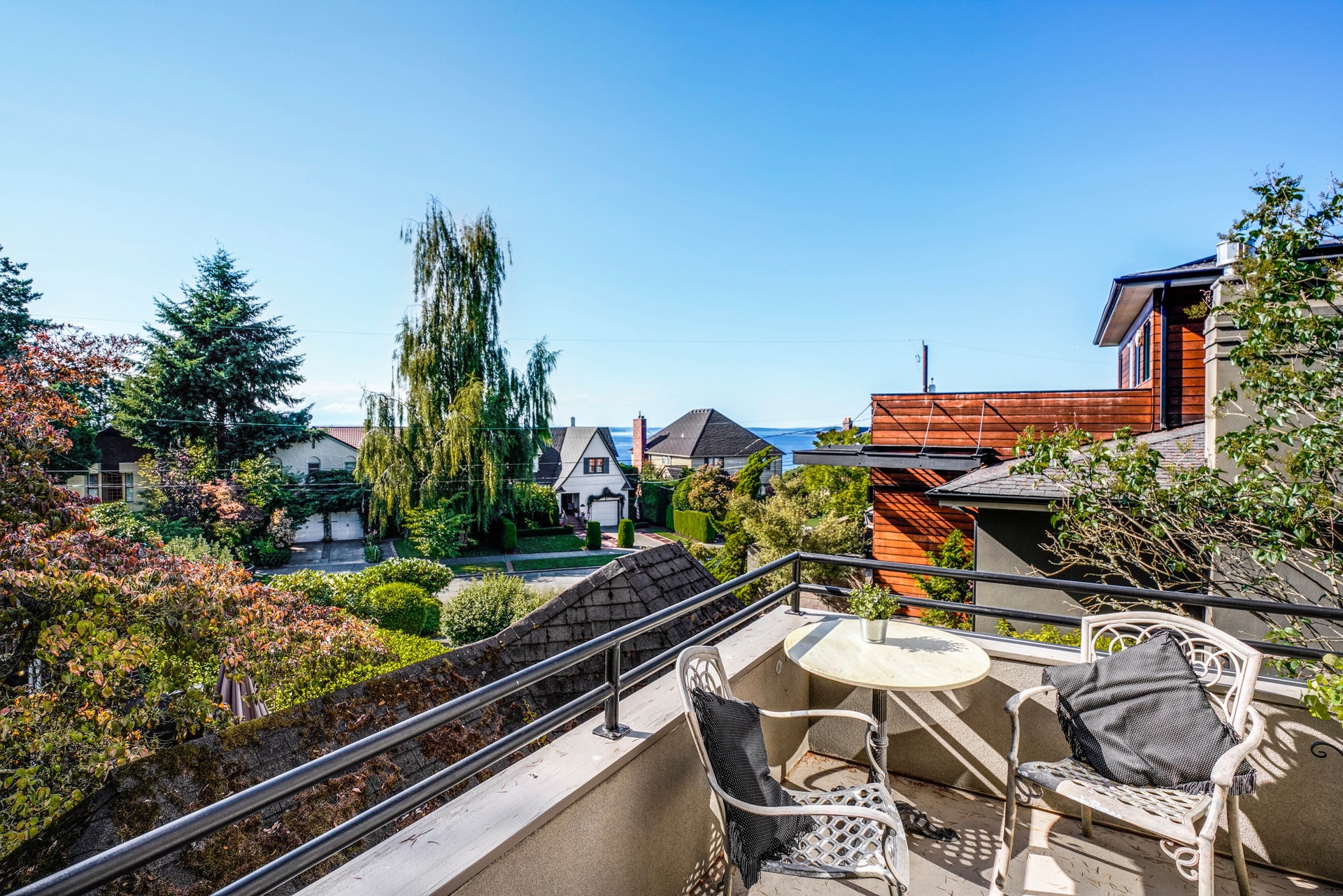
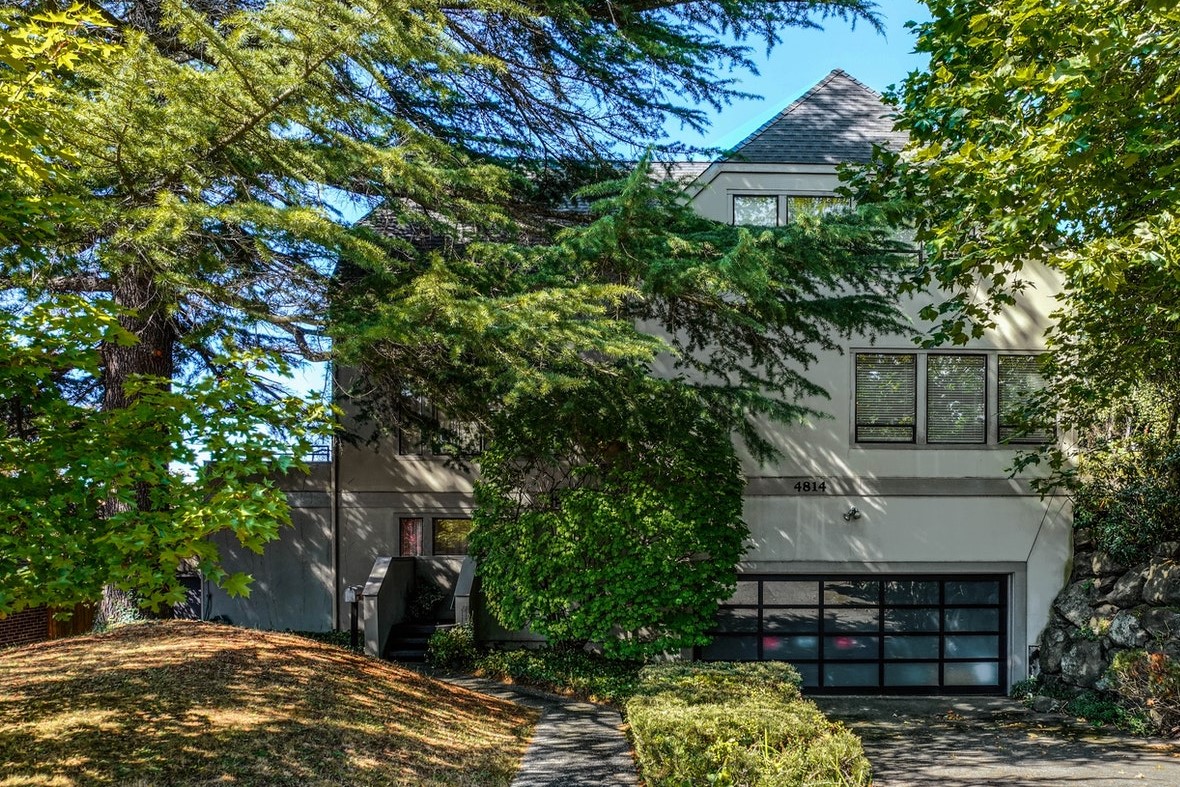
If you’ve been looking for a solid house that is waiting for your personal touch, look no further. Located on a quiet street in Somerset, this home offers a fantastic floor plan with great bones, ready for your cosmetic updates. Features include vaulted ceilings and huge windows that maximize light and the beautiful western vistas including peeks at the city skyline and Olympic mountains. Open concept kitchen with nook and family room leading out to the backyard. Lower level rec room with den perfect for home office. Attached two-car garage, lots of storage. Wonderful community, convenient to everything including top Bellevue Schools: Somerset, Tyee, and Newport. You’ll love it here! Check out the listing details here.
1. Economic Growth Will Pick up – But Not Until the Summer
As you are all aware, the job recovery has slowed significantly over the past few months and the December number – which saw employment levels actually drop by 140,000 jobs – was really quite appalling.
But… as bad as the numbers were last month, I am still expecting to see solid employment gains this year.
That said, I don’t see significant improvement until the vaccine starts to be distributed widely AND a majority of us choose to take it.
And when we get to that point – likely in the second half of this year – look for a lot more jobs to be added across the country, but employment levels will rise for a reason that most people aren’t thinking about, and it’s because I believe that the public – as they feel more comfortable going out – will start
to spend again.
In fact, it’s my forecast that spending will rise very significantly later this year and that will give a much-needed boost to the economy and the job market.
You see, we haven’t been spending our hard-earned dollars at normal levels for almost a year now and, quite frankly, the cash that we have been hoarding since the pandemic started is starting to burn a hole in our pockets.
So, my number 1 prediction is that we will see significant economic growth– and job gains – this year, but that most of the growth will come in the second half of 2021
2. The Move to the Suburbs is Real – But Don’t Get Carried Away! Looking now at the housing market, there’s been a lot of talk about a COVID-19 induced flight away from cities and into the countryside.
Well, the numbers don’t lie – there have certainly been more interest from buyers looking at markets outside of our core metros and this – obviously – is a function of the work-from-home phenomenon that I believe is not a flash in the pan, rather it is real and will be in place for a long time, if not forever.
But there is a bit of a wrinkle in this theory. In as much as we are certainly seeing suburban flight from markets like New York and San Francisco, the same can’t be said for much of the rest of the country.
In fact, according to a study recently published by Lending Tree, the percentage of owners who moved out of the top 50 largest metro areas in the country in 2020 was just 2.2% – now this is up from 1.9% in 2019 – but it’s hardly the tsunami that many had anticipated. And it’s also worth mentioning that some of the markets within Windermere’s footprint actually saw a net increase of migrating homeowners and not a drop. Examples of this include Denver which saw the number of households moving in up by 3.6% in 2020; Portland was up by 3.4%; Seattle by 3.3%; and Sacramento saw an in-migration rise by 2.9%. Although some households will move because work from home allows them to relocate to cheaper markets, it doesn’t mean that we are all headed out to the wild blue yonder.
In fact, I believe that – even though a good number of households will move – many will stay within striking distance of their workplaces, and I say this because I expect the work from home concept to be one where we work part-time from our homes, and part-time at our offices.
My number 2 forecast is that although people will move away from some of our core cities this year, many will still stay in the same region as work from home will not be a full-time situation for a majority of workers.
3. Not all Apartment Markets are Created Equal
The apartment market has been hit very hard by COVID-19 with rising vacancy rates putting significant downward pressure on rents in many large markets such as Seattle, San Francisco, Boston, and New York but guess what? We are actually seeing rents still rising in many smaller cities and these include Boise, Fresno, and Tucson, Arizona.
And this move away from expensive apartment markets is occurring for several reasons not least of which is – again – work from home, but it’s also due to an increasing number of renters turning into home buyers, and it’s also because the rent premium for being “close to the action” in major cities has faded and, because of this, I see previously overlooked suburbs and
small metros benefitting from growing demand.
2021 will be a tough year for many landlords in larger cities not just for the reasons I have already mentioned, but also because we are bringing on over 400,000 new apartment units across the country this year and many new developments are in these larger cities.
Number three forecast – Apartment owners in pricy markets will continue to suffer in 2021, but smaller markets will perform rather well and – after many years of being overlooked – I am also forecasting those apartment developers will start to turn their attention toward suburban markets and away from many of these larger cities. We haven’t seen that in over a decade.
4. The Luxury Housing Market Will Continue to Perform Very Well
One of the sectors that really performed far better than anyone – including me – had anticipated in 2020 was the luxury housing market, and I expect this sector to be very robust again this year and the reason for this, primarily, will be interest rates. Jumbo mortgage rates, which saw a spike at the start of the pandemic, have since dropped significantly and this is benefitting buyers of luxury housing.
Buyers of luxury housing will be very active this year and I see many focusing on some secondary markets – for value reasons – but I still expect that the classic luxury markets, like the Hamptons for example, will also do very well.
Other markets where the luxury sector will outperform are Miami – but this will be mainly due to tax changes in New York City driving owners to relocate – and I’m also watching Southern California and predict that luxury homes down there will also outperform this year.
One more thing I would mention is that I also expect that, as the country starts to reopen post-COVID, we will see a rebound in foreign buyers as well so keep an eye on that too.
Forecast number 4 – the luxury market will be more robust in 2021 than many had anticipated.
5. Cities will Start to Pay More Attention to Zoning (at Long Last!)
Many of you will be more than aware of my ongoing concerns regarding housing affordability. Now, we have seen some cities like Minneapolis, and even some States – and here I’m talking about Oregon – start implementing significant zoning changes to allow for more new home development in their markets which is impressive, but it certainly isn’t happening everywhere.
However, I believe that this year we will – at long last – start to see more attention from legislators when it comes to increasing the supply of land for residential construction and many will do this by adjusting current zoning policies to allow more land on which to build.
So why this new focus? Well, their attention will be driven by worries that high housing costs in their own markets may lead businesses to start to look at cheaper areas and – possibly – move away from their current locations, and other businesses that are thinking about expanding into new markets – well, they will be increasingly thoughtful about how housing costs in expansion markets will impact how much they have to pay their new employees.
You see, we know that almost every jurisdiction across the country is suffering from significant shortfalls in revenue and, because of this, legislators will have to start focusing on attracting new businesses – and retaining as many businesses as possible – in order to help replenish their coffers.
Forecast Number 5 – Although it won’t happen overnight, I am hopeful that discussions around zoning changes will start to pick up some steam this year.
6. Adaptive Reuse Will Gain More Traction
Over the past several months, many of you have asked me whether we will see office buildings converted to residential uses as there will be fewer workers occupying offices. Well, I am sticking to my belief that the cost of conversion and the layout of office buildings (primarily due to core depths, lack of plumbing penetration, and the like) just don’t lend themselves to conversion to residential uses – well, that is unless you buy them at bankruptcy prices!
That said, I am expecting to see other building types that may be better suited for conversion into either single residential use or a mix of uses, start to become attractive to developers.
And what are these other product types, you ask? Well, likely unsurprising to you is that I am looking at hotels – which are going to continue to be hard hit for, in my opinion, years… and retail malls – both strip as well as regional.
You see, we are already seeing more hotels – mainly inns and motels – be listed for sale as they are just not providing adequate cash flow and I expect
that some, but not all, may become ripe for conversion into residential uses.
As far as malls are concerned, look for more interest in the conversion of regional malls into mixed-use projects, but strip malls may get rezoned into single residential uses.
Number 6 – developers will start to pay more attention to the reuse of existing buildings in addition to ground-up construction.
7. What’s important in a post-COVID-19 home?
The pandemic has started to change what we are looking for in a home and it’s actually very interesting to see what is now becoming important to buyers. We know that work from home is real, but I see households moving not just because housing is relatively cheap further out, but many will look at their own homes – even if they are on the fence about moving – and realize that it’s just not set up for working remotely on a semi-permanent, or permanent, basis.
How many people do you know who have spent the past several months working from their dining room tables? I’m one!
But I also expect to see sellers who may not have an office in their homes, create dedicated spaces for an office set up to attract buyers or, where they just can’t do that, they will, at a minimum, create a dedicated Zoom space before listing their homes for sale!
I am also forecasting that you will also see new construction housing reflect these changes with builders better aligning their product with new consumer preferences and that demand for new homes will rise in 2021 as builders address these new requirements from buyers.
People want more space today because they are using their homes more and I already see builders addressing this with the average new home size rising last year following several years where new homes were actually getting smaller.
Also, when it comes to new construction, open floor plans — once a must — well they will be replaced too thanks to COVID-19 and buyers wanting more room separation.
And finally, I expect buyers who are looking to move a lot further out to become far more interested in markets that have high-speed internet access. Many of us take it for granted, but buyers will start to list this as a requirement, rather than an option – again possibly limiting moves too far out into the country.
Forecast Number 7 – Home preferences are changing – builders are already adapting, and owners of existing homes will have to do what they can to meet these new requirements.
8. Worries About Forbearance are Overblown.
Since last spring, a question that I have fielded probably more than any other, has revolved around the topic of forbearance.
The GSE’s have extended the forbearance program to the end of March so some of the pressure has been removed, but there are a lot of people who fear that – when forbearance expires – we will see a veritable tsunami of foreclosed homes come online and this massive increase in supply will lead to all homes seeing values drop.
Well, it won’t happen, and here’s why.
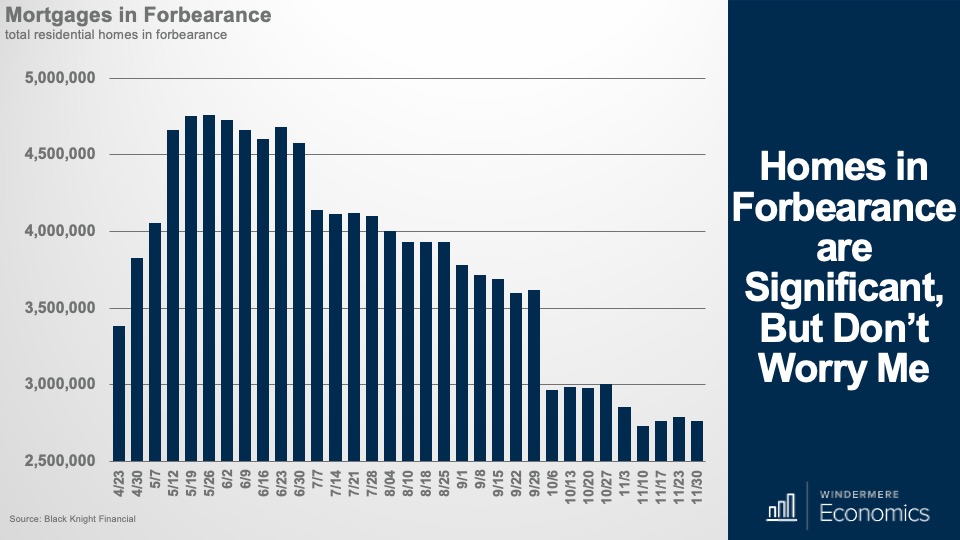
First off, the number of homes in forbearance is already down by 43% from its May peak. Even though it is true that the pace of the drop in the number of homes in the program has slowed, the trend is still headed in the right direction.
Yes, there are still 2.7 million homes in the program, but I believe that, as owners start to get back to work again, many will be able to either refinance their loans or work with their lenders to extend the term of their mortgages in order to make up missed payments and most will not end up in foreclosure.
I would also add many owners in the program – if they just can’t get back on track – will sell in order to keep the equity that they have built over the last few years and, in most areas, there will be enough buyer demand and they will be able to get out from under forbearance by selling and paying off the mortgage and missed payments that way.
Of course, we will see foreclosures rise this year, but I just don’t see the majority of owners in forbearance be forced into foreclosure and that will limit the downside risk to the housing market.
That said, I am a little more worried by condominium owners who are in forbearance as the supply of these homes is already on the rise and this is causing prices to soften relative to single-family homes.
This is not a phenomenon spread broadly across the country, but many markets are seeing condo price growth slow and some – here I am looking specifically at Queens in New York, Suffolk County in Boston, and in San Francisco County – are seeing real price declines and I do expect to see a greater share of condos end up in foreclosure, but a far smaller share of single-family housing will suffer the same fate.
And I must add that not all market areas are created equal. Today, total delinquency rates are very high in states like Mississippi, Louisiana, New York & Oklahoma, but here in the western US they are significantly lower.
Interestingly, when I looked at Windermere’s footprint, I am delighted to report that the States with the lowest rate of non-performing mortgage include Idaho, here in Washington State, Colorado, Oregon, and Montana.
So forecast number 8 – I do not anticipate a wave of foreclosures following the end of forbearance, and that the foreclosures that do occur will have a limited impact on the broader ownership housing market.
9. Mortgage Rates Will Rise – But Don’t Worry
Rates for 30-year conforming mortgages have broken below all-time lows 16 times since the pandemic started. Really remarkable with the average 30-year rate at the time of recording this video standing at 2.65% and rates down by over a full percentage point over the past year and that, naturally, has allowed prices to continue rising at above-average rates, but going forward I just don’t see them dropping much more, and I believe that we have, at least for now, reached a floor when it comes to rates.
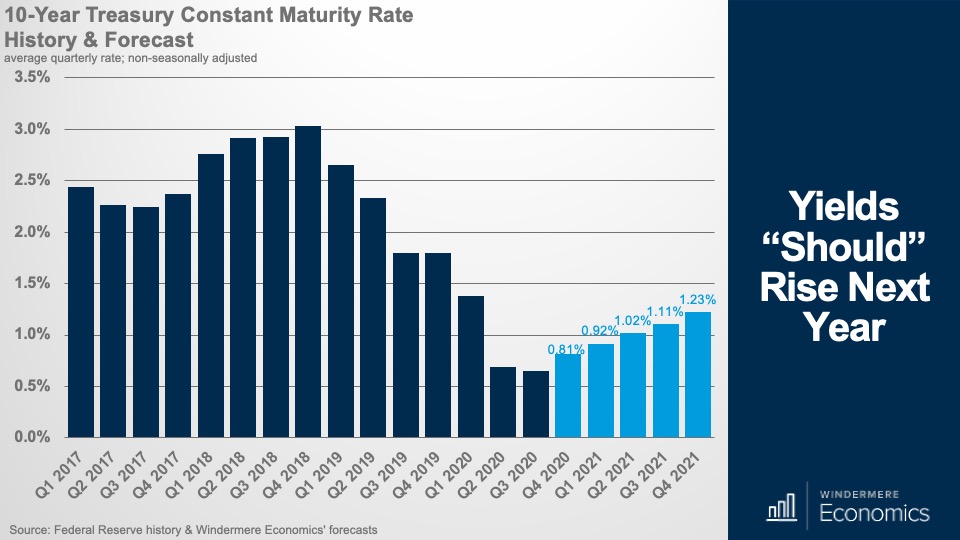
Without getting too academic, the reason I say this is that mortgage rates track the interest rate on 10-year treasuries – or at least they should – but that relationship broke back in February – because of the pandemic. However, treasury yields have started to rise again, and that relationship is now back in line which tells me that rates are unlikely to drop much further – all things being equal.
Prediction number 9 – mortgage rates are unlikely to drop much more, but don’t anticipate them rising too much with this year averaging around 3.1%. Still very competitive.
10. US Home Sales Will Rise Significantly, but Price Growth Will Moderate
Finally, I just have to talk about home sales and prices even if I did cover this in my last forecast. Given all the factors I have already talked already, we will see more demand from buyers this year, and I also expect to see listings actually increase as people look to relocate, and this will lead sales in 2021 to rise to a level we haven’t seen since 2006!
And big players in the housing market as far as buyers are concerned will be renters turning into home buyers and I would add that we could see first-time buyers make up an even bigger share of the market if the Biden Administrations goal to introduce a new first-time buyer tax credit gets enacted – but that is certainly not a given.
Overall, existing home sales will rise by 7.7% in 2021 to around 6.2 million units.
As for prices, well I see them increasing again this year but, as I just mentioned, mortgage rates will start to move modestly higher and this will be a bit of a headwind to price growth, and affordability constraints will also start to slow appreciation in expensive housing markets. This year I am looking for average prices to rise by a relatively modest 4.1%.
My final forecast – home sales will rise significantly this year, but price growth will moderate.
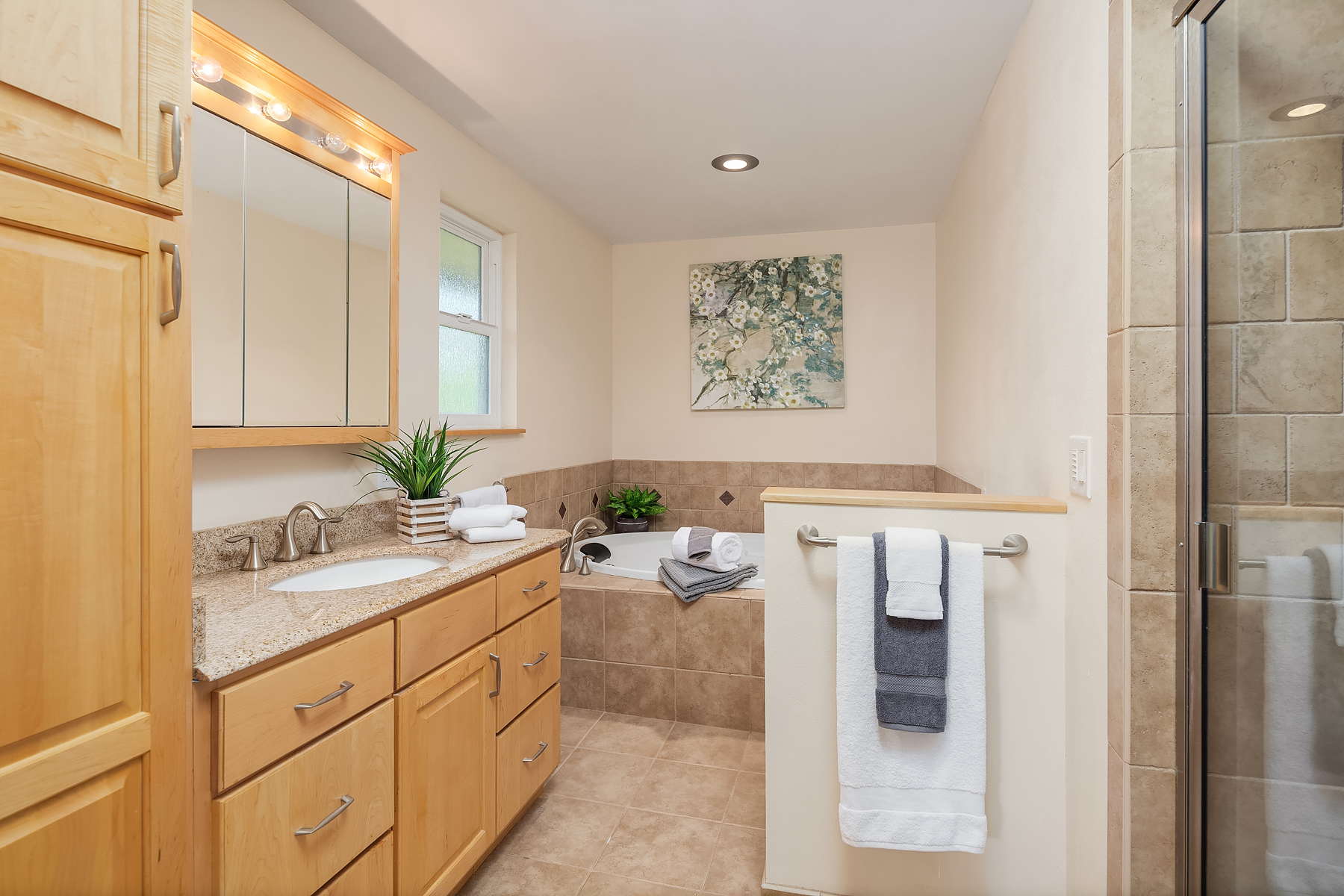
Not to be missed home in prime Somerset location, this traditional four bedroom home offers all the right spaces. Beautifully remodeled kitchen with eating area, stainless appliances, and granite counters. Dining room leads to Trex deck and fully fenced sunny backyard. Spacious living room with fireplace. Primary suite offers luxurious bath including jetted tub and separate shower. Additional two bedrooms up with remodeled guest bath. Lower level includes family room, fourth bedroom and three-quarter bath. Newer roof deck above huge RV or boat parking garage with territorial views and peeks at the mountains and lake. Two-car garage with workshop. Top area schools, Somerset (just three blocks away), Tyee, and Newport High. Open Saturday March 6th – 12-2, Sunday 7th – 1-4. https://stephaniekristen.withwre.com/listing/128183782
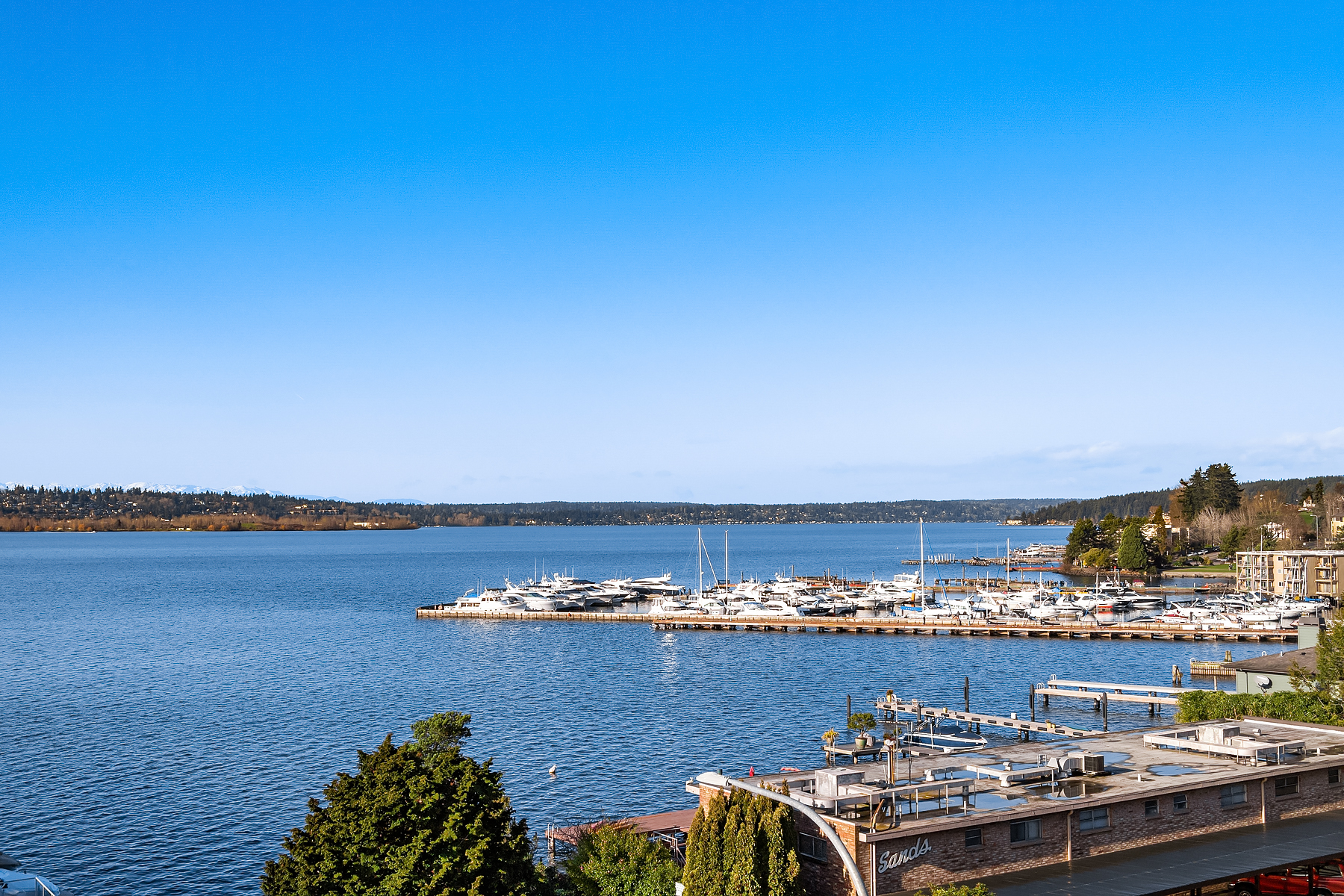
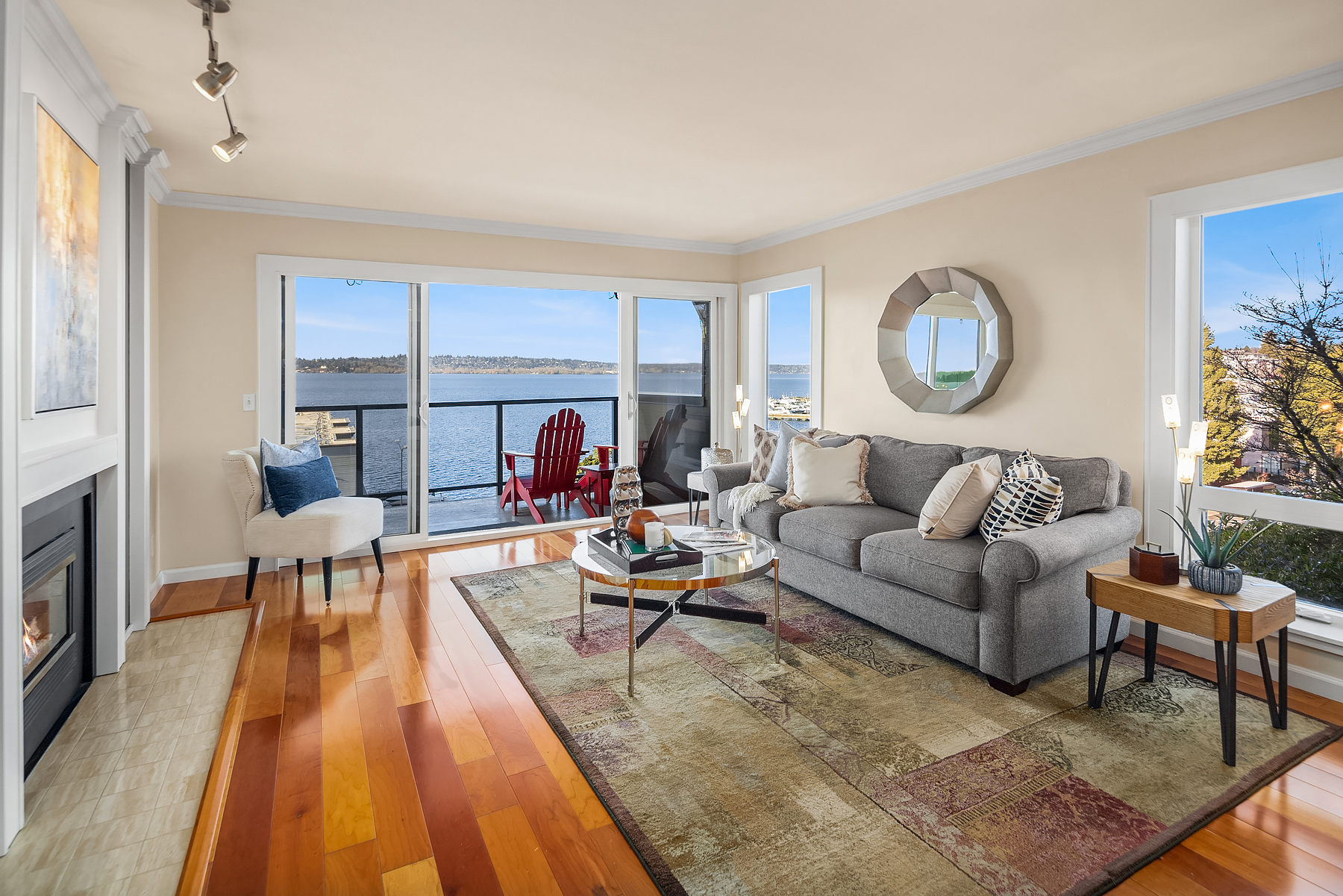
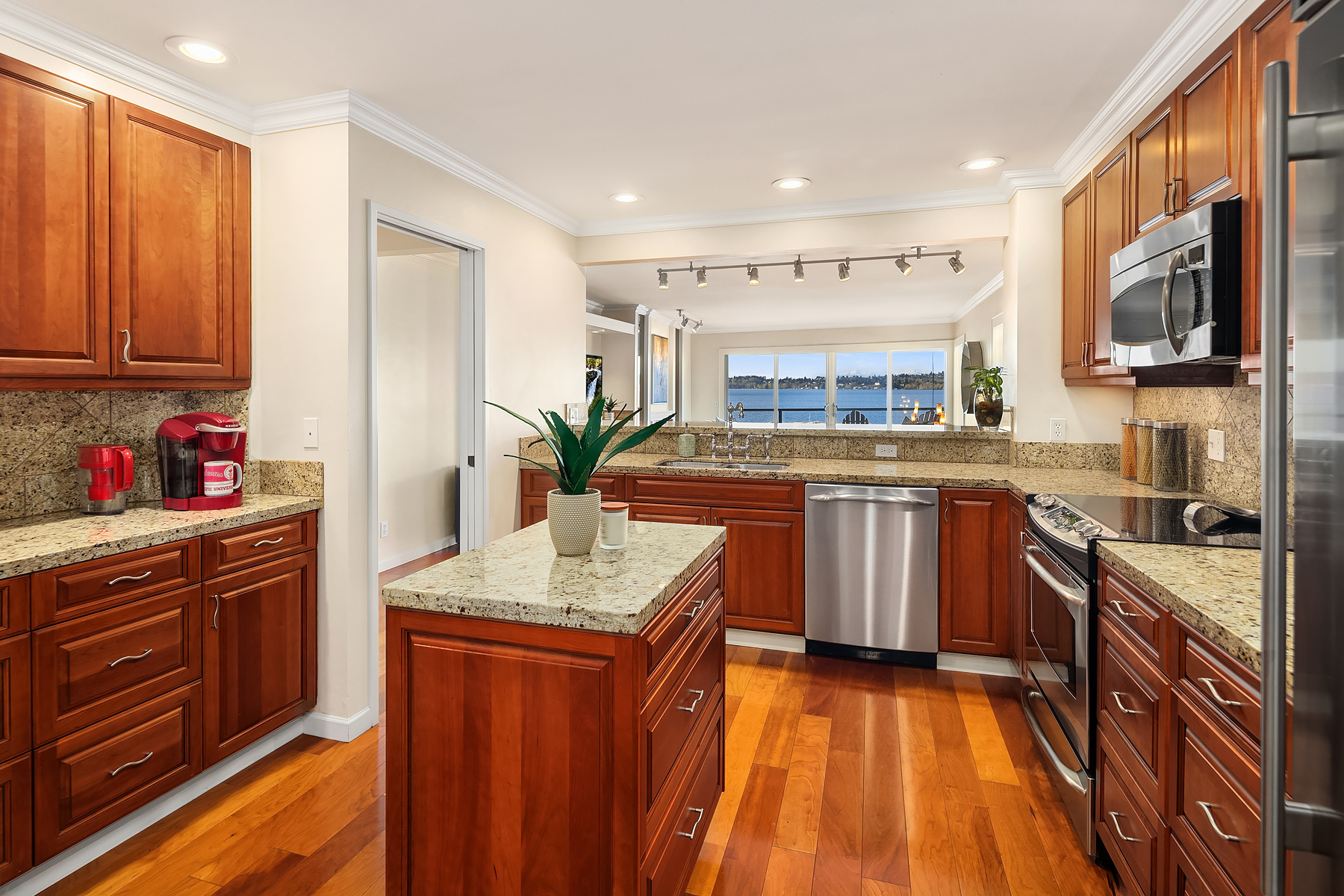
Cash sale with two-week closing – Expansive views from this pristine corner unit at Harbour Pointe in the heart of downtown Kirkland. Wall of windows opens to views of the Lake Washington, Olympic mountains, and Seattle skyline. Beautifully updated unit and meticulously maintained building make for easy living. Island kitchen offers an abundance of cabinets and rich granite. Great room concept living/dining soaks in the light and opens to entertainment sized covered lanai. Wake to stunning views from the primary suite with spacious bedroom. Second bedroom is an ideal work from home space with custom built-ins, and a Murphy bed for the occasional guests. Laundry room with additional storage, two parking spaces. More information here.
If you’re thinking of making a move, I’d love to talk with you about how to take advantage of today’s market. It’s the pre-marketing that goes into the home before you go on the market that makes a difference. We have systems in place to help make that whole process easier for you. Let’s talk.
In the first “Monday with Matthew” of 2021, Matthew Gardner digs into the latest industry data releases and what they signify for the housing market in the year ahead.
We are fortunate to have the analytical wisdom of Windermere Chief Economist, Matthew Gardner. Here he talks about his forecast for the 2021 housing market. While this is a national outlook, let me know if you would like more details on our regional markets. Wishing you all the best and stay safe! ~ Stephanie
Hello and welcome to this rather special episode of Mondays with Matthew. I’m Windermere Real Estate’s Chief Economist, Matthew Gardner.
Now, if you wonder what’s special about this particular episode, well the answer is twofold.
Firstly, I started these videos at the onset of the COVID-19 epidemic back in March and this is the 35th episode of Mondays with Matthew – where has the time gone? Anyway, it will be the last one for this year and I wanted to take just a moment to thank all of you for taking time out of your busy schedules to watch my videos. It makes this economist very happy to think that you are still getting value out of my musings.
But there’s another reason that I am excited and it’s because, after many, many late nights poring over spreadsheets, I am now ready to share my 2021 US housing forecast with you so, without further ado, let’s get to it!
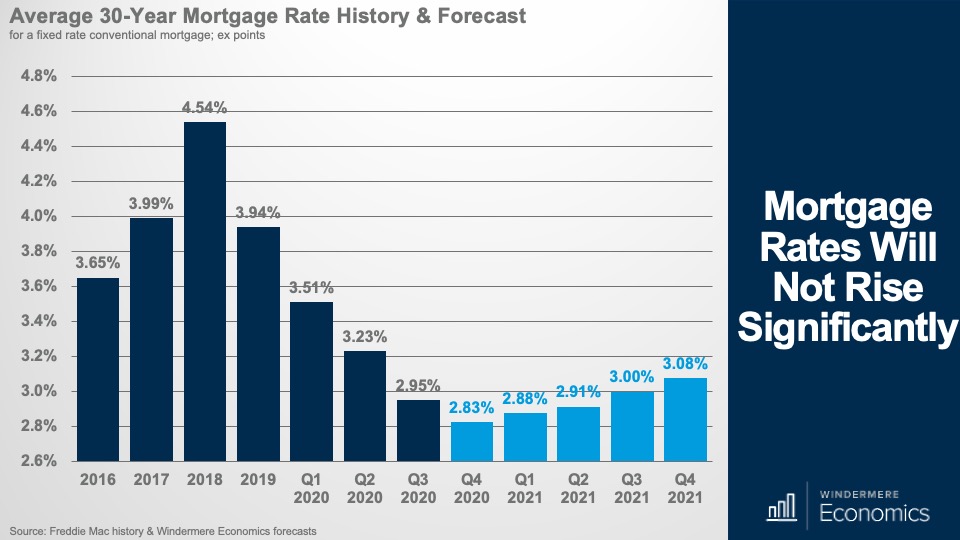
I’m starting off with my mortgage rate forecast.
As you will all be very aware, we have spent the entire year watching mortgage rates break record lows almost every week which, along with other factors, has helped drive housing demand significantly higher, but how low can rates go?
Well, my forecast suggests that rates will likely bottom out in the current quarter but that said, I do not anticipate them rising much as we move through 2021.
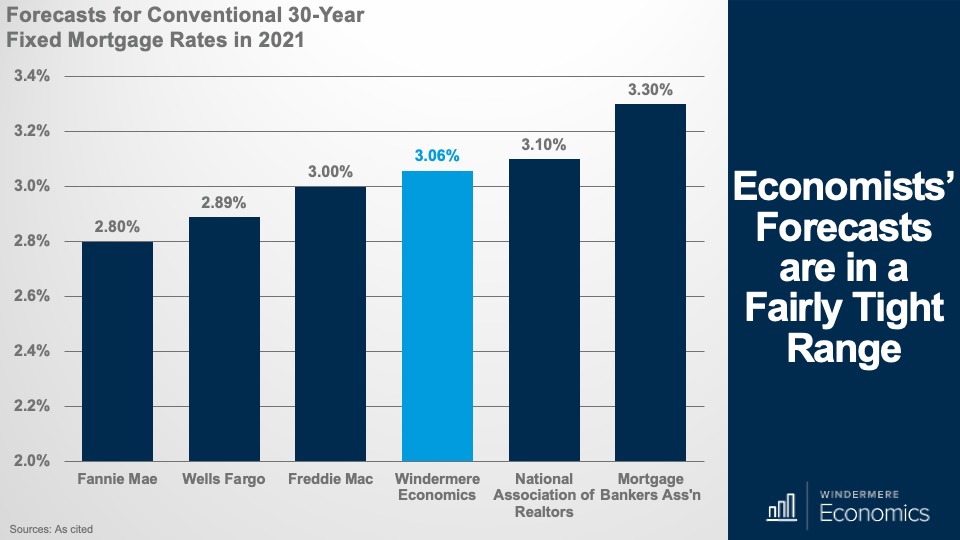
Now, I always like to see how my forecasts compare to others, so I spoke with a few housing economists across the country to see where they were regarding rates, and – as you can see – we are all in a pretty tight range for next year. I will tell you that my friends over at Fannie Mae were pretty defensive about their very optimistic forecast – I guess that we will see.
And looking further out – where my crystal ball fogs over just a little – the brave souls who are putting out forecasts for 2022 are showing rates not moving much higher even then, with Fannie Mae at an average of 2.9%, Wells Fargo at 3.1% and the Mortgage Bankers Association a little higher at 3.6%.
The bottom line here is that we are all pretty confident that although rates will start to rise, the increase will be modest, and I personally don’t see it impacting housing demand at all.
And to explain why we will see rates rise, 30-year fixed-rate mortgages are pretty directly correlated with the yield on 10-year treasuries, and you can see here that my forecast shows these rising – albeit modestly – next year and, naturally if this occurs, rates will follow.
But there are 2 reasons that might stop rates rising – at least by too much, even if Treasury yields do head higher. First is the COVID-19 vaccine. You see, if it takes longer to distribute, or if we chose not to take it, then the economy could take another dip and, if that happens, treasury yields will likely pull back, and rates could drop again. But I remain hopeful that this will not be the case.
And second is the Fed. As long as they continue to buy mortgage-backed securities, rates are actually insulated from rising treasury yields.
OK – on to sales, and here I am specifically looking at existing homes – I will address new homes shortly.
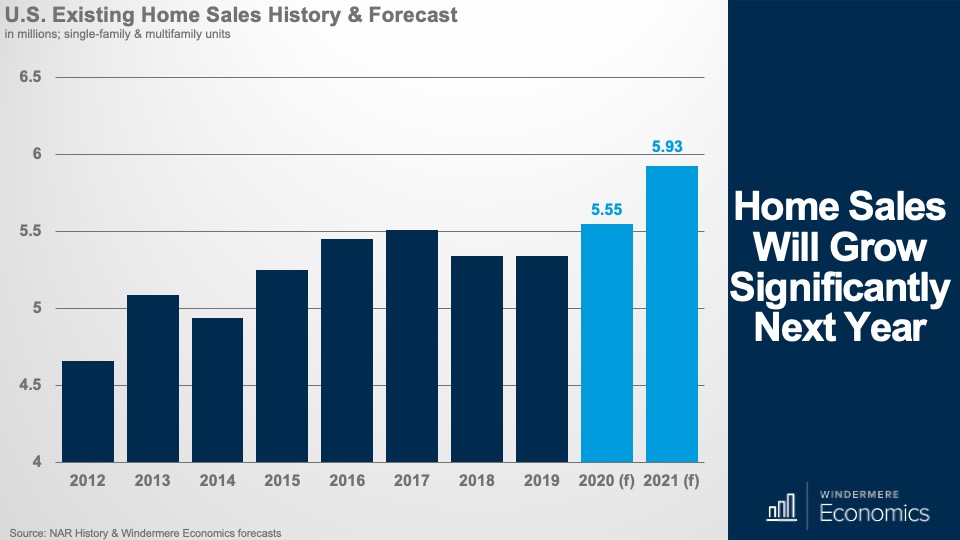
My forecast is for sales this year to have risen by 3.9%, but sales in 2021 should be up by 6.9%, and that’s a level we haven’t seen since 2006.
But in order for sales to rise to this extent, we need more inventory, and I do expect to see more listings next year and it will likely be, at least partially, due to COVID-19 with some household’s new ability to work from home removing the need to live close to their offices. But there will be others who will move simply because their current homes just aren’t set up for remote working.
Although I see a lot of homeowners moving due to work-from-home I believe that a lot of them will not move that far away. You see, the theory that we will all be working from home full-time is – in my opinion – likely overblown – and I would contend that a lot of them will end up blending their workweek with some days at home and some days at their offices and, if I am correct, I see many households still staying within reasonable proximity of their workplaces.
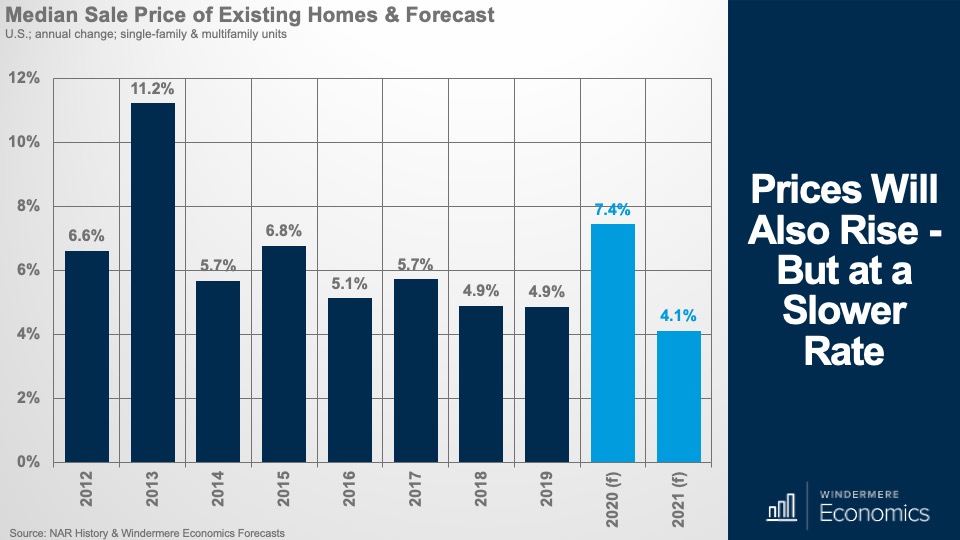
Turning our attention now to sale prices, well this year has been very impressive so far and we should see sale prices in 2020 ending up 7.4% higher than we saw in 2019. Now, this is quite remarkable, and I say this because I took a look at the 2020 forecast, I put out last year and I was forecasting price growth closer to 4% than 7%.
But COVID-19 changed all that. Mortgage rates dropped, households decided for several reasons to move and, in concert with a historically low level of homes available to buy, prices have risen significantly.
Now – and as I have said for years – there must always be a relationship between incomes and home prices, and mortgage rates dropping can only allow prices to rise by so much.
And, along with other factors, it’s partly due to affordability issues that I see prices rising by a more modest 4.1% in 2021.
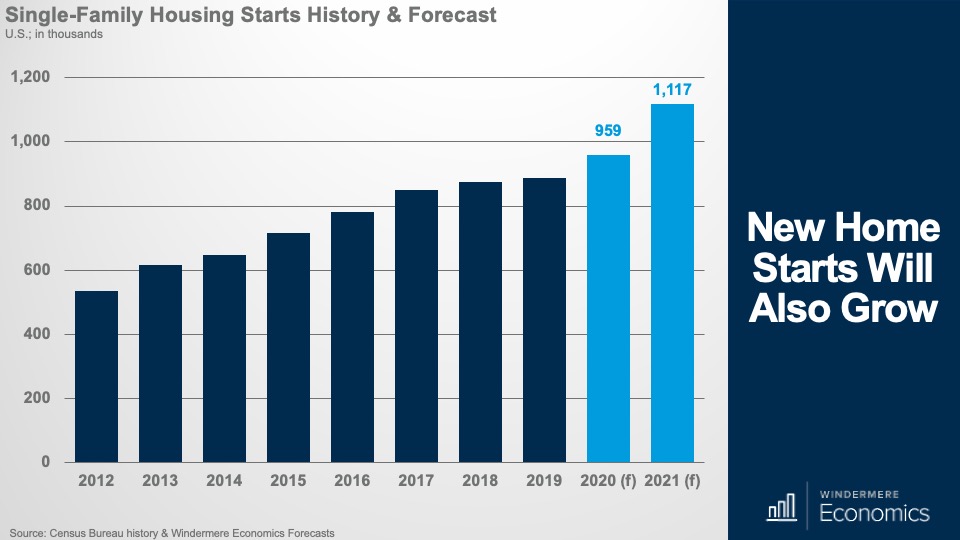
OK – looking now at the new home market – and for the purposes of this discussion I am just looking at the single-family market – so far this year we have seen a significant jump in new home sales and this very robust demand has encouraged builders to start construction of more homes and my forecast for single-family housing starts shows them rising by 8% this year, but next year I’m seeing starts up by a very significant 16.4%.
This is good news for several reasons, the biggest of which is that more new construction will add to supply and that should take some of the demand and price pressure off the resale market.
And with more starts, I expect to see sales rising with an increase of 21.5% this year and a further 18.7% in 2021. Notably, this will put new home sales at a level again that we haven’t seen since 2006.
But I do have one concern regarding the new home market, and my worry is all about cost.
Builders want to do what they do best, and that’s build homes, but they have to reconcile the costs to build a home, which are extremely high today, with the prices that would-be buyers can afford.
Now I see them managing this issue by looking to areas where land is cheaper and where there is still demand from buyers who, as we just talked about, are now looking at markets further away from major job centers.
The bottom line is that the new construction market will see very solid gains next year.
And finally, it would be remiss of me if I weren’t to address the one thing that is troubling a lot of brokers – and their clients –and that’s forbearance.
Although we saw a modest uptick in active forbearance plans earlier last month, I think it’s important to put things in perspective.
Despite small increases in the number of homes we saw entering the program, the number of active forbearances is still down by 8% (or 246,000 homes) from the end of October.
In total, as of November 30, there are 2.76 million homeowners in active forbearance plans and that represents approximately 5.2% of all mortgages but again, for perspective, the number of owners in forbearance is down by almost 2 million from the peak back in May – that’s a drop of 42%.
So, let’s talk about this for a bit.
As is human nature, there are some out there predicting that the housing market is going to crash again purely because of the number of owners in forbearance – all 2.76 million of them –will be foreclosed on when forbearance ends next spring, and this flood of foreclosed homes will lead to a spike in supply and this will lead prices to drop in a manner similar to 2008.
I get the theory, and I guess that at face value you might say that it seems plausible, but is it?
Although there’s no getting around the fact that foreclosures will rise next year as forbearance terms end, will it really be that dramatic?I think not.
There are several reasons why I’m not overly pessimistic about this. Although I see foreclosures rising next year, I actually expect the numbers to be very mild when compared to the carnage we saw between 2008 and 2010.
Why do I think this? Well, the housing bubble burst for very different reasons than we are currently experiencing. Back then there was a frenzy of reckless lending, irresponsible borrowing, and the unbridled speculation that did nothing more than set the housing market up for a crash. And crash it did. Home prices collapsed, and millions lost their homes.
But, back in March of this year – when COVID-19 really kicked in – homeowners were actually in a very good place. Credit standards were still very tight, down payments were significant, and the housing market, along with the economy as a whole, was extremely healthy and that’s the difference.
The COVID-19 pandemic has primarily hit renters, but it has impacted a lot of homeowners too and, as much as I am very sorry to say that we will see a rise in mortgage defaults and foreclosures but as the housing market muscles its way through the current economic downturn, I see foreclosures forming more of a trickle rather than a flood.
And, to support this, my colleagues over at ATTOM Data Solutions are currently forecasting more than 200,000 homeowners are likely to default next year but, if there is a longer-term Coronavirus related slowdown in the economy, the foreclosure count could get as high as 500,000 homes.
But as dramatic as their projections may seem, it’s worth noting a few things.
One. During the Great Recession, foreclosure filings spiked with 1.65 million American homes going into foreclosure in the first half of 2010, but this is well above the most pessimistic forecasts for foreclosures next year and even if defaults rise dramatically, they’ll still come in well below the levels we saw following the bursting of the housing bubble.
Two. As I talked about earlier, home prices have risen steadily since 2012 and homeowners have built up large reserves of equity. This is the total opposite of the situation we saw in 2008.
And it’s because home values have been rising, a lot of borrowers in forbearance will be able to escape foreclosure by simply selling – we know that there is more than enough demand and they will sell to make sure that they get the equity out of their homes rather than to potentially lose it because of foreclosure.
Third. Lenders really have no stomach for a repeat of the foreclosure crisis we saw back in 2008.
Today, I am seeing lenders positioning themselves to use a more-cooperative, less-punitive approach to delinquent borrowers and that they will do a better job of keeping people in homes.
And finally. Many, but not all, of the owners in forbearance, will not enter foreclosure because they will be able to catch up on their past-due amounts by paying more each month and some may be allowed to add the past-due amount to the end of the mortgage by lengthening its term.
The bottom line is that the housing market, and homeowners, are in a much better position today than they were back in the bubble days. Homeowners today have far more options to avoid foreclosure, and equity is surely helping to keep many afloat. Put it this way, even if today’s rate of foreclosures doubles, it will still only hit a mark that’s more in line with a historically normalized range.
Ultimately, I’m not concerned that we will see the housing market collapse because of forbearance.
And finally, a few more nuggets to think about.
Even if we ignore concerns over forbearance, there are still some talking about a housing bubble purely because prices have risen so rapidly over the past several years but I, along with my colleagues, just don’t see it. It is true that prices have been rising at above-average rates, but fundamentals are still in place. As I mentioned earlier, borrowers are well qualified, and they have solid equity in their homes.
But, as I have shown you, price growth is set to slow and I think that, because of this slowdown in price increases, there will surely be some homeowners who will think that the market has collapsed just because real estate agents aren’t telling them what they want to hear as far as the value of their home is concerned. What they need to understand is that the market isn’t collapsing, it’s just normalizing.
Sellers have had the upper hand for a very long time now, and many may have forgotten what a normal housing market looks like.
In the early days of the pandemic, it is true that buyers did gravitate toward the suburbs and I know this because 57% of buyers who bought between April and June of this year chose suburban locations and this compares with 50% before the pandemic. But it’s hardly the exodus from cities that some had speculated, and I would also note that there was even a small uptick in urban home purchases in that 3-month period – 12% before the pandemic, and 14% after. Meanwhile, sales actually fell a little in small towns and rural areas in the same timeframe, so I do not anticipate a massive move to the countryside.
Yes! You’ve heard this from me for a long time now. First-time buyers will be a major force again this year – and for years to come – brokers need to figure out how to work with them. Their numbers are only going to grow.
Condos – Hmmm this is interesting. Although I don’t see the condo market collapsing across the country – although I do see significant issues in markets like Manhattan and San Francisco – I am seeing inventory levels rise fairly significantly as opposed to single-family homes for sale whose numbers continues to drop but, for now, there still appears to be demand as sales are higher too. My concern is really in regard to the urban condominium market. You see, for many, the primary reasons to buy a downtown condo are twofold. Convenient access to work, and lifestyle.
Well, some won’t have to live close to work if they are working a majority – or all – of the time from home and secondly, if we lose some of the lifestyle reasons to live in a city – restaurants, retail, and the like, well that takes away some of the rationale behind buying a downtown condo.
There’s no need to panic yet but I will be watching urban condo markets to see if demand continues to keep up with rising supply. If it doesn’t, then we may well see prices softening.
And finally, well done, you made it through 2020!
So, there you have it. My 2021 US housing forecast.
I really hope that you have found this video – and the ones I have published before – of use to you and your clients.
As always, take care out there, and remember to wear your masks.
In all seriousness though, it really has been an honor to speak with you all this year and, hopefully, we will meet again –in person this time – at some point next year.
So, between now and then, stay safe, have a wonderful holiday, and here’s to a great 2021 for all of us.
Prime Lower Kennydale location home enjoys beautiful lake views! Located at the end of a private road, this home offers a park-like setting, beautifully landscaped yard ideal for outdoor living. Open great room living with bright updated kitchen and western exposure. Lake views from main floor master suite with abundance of closets. Huge lower level living with lots of versatility. Oversized two-car garage w/additional parking for RV or boat. Two blocks from Kennydale beach park. Ready to go! $998,000. Check out the virtual tour here.
This North Admiral home is one of a kind in size and style. Living room with west-facing windows let’s sun stream in and offers a deck with Sound views. Upstairs primary suite with glorious mountain and Sound views. All bedrooms are ensuite with private baths. Lower level with separate entrance to full studio suite with kitchen & 3/4 bath. Two car garage plus workshop, and an abundance of storage throughout. Perfect home for living together while enjoying some space apart. Prime location for Sunset Ave strolls and all the area offers including the library, Metropolitan Market, Mioposto, and West Seattle Grounds. You’ll love it here! More Details Here


 Facebook
 X
X
 Pinterest
 Copy Link